
Not long ago, SQL injection was the silent weapon behind some of the biggest data breaches in history. Today, I’m watching a new threat take its place one that doesn’t target databases directly, but something far more unpredictable: artificial intelligence. Prompt injection is quickly becoming the new SQL injection, and the implications are far more complex than most organizations realize.
What stands out to me isn’t just the technical novelty it’s how easily these attacks exploit trust. In an era where AI systems are designed to listen, interpret, and respond, that very openness is becoming their greatest weakness.
Background: Why Prompt Injection Matters
To understand why Prompt Injection matters, I find it helpful to draw a parallel with SQL injection. Traditional SQL injection exploited poorly sanitized inputs to manipulate databases. Prompt injection, however, targets the instruction layer of AI models the prompts that guide how these systems behave.
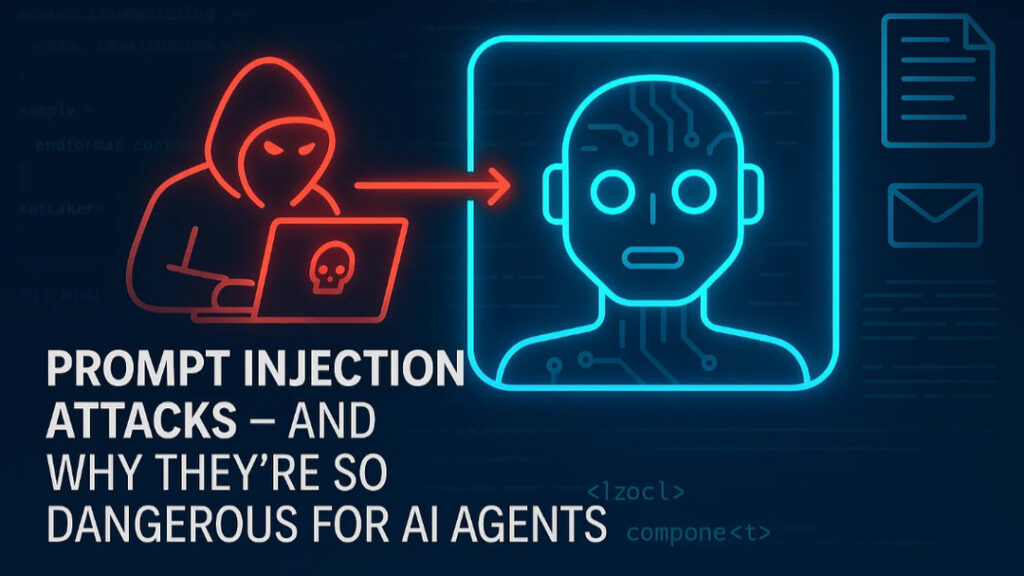
Instead of injecting malicious SQL code, attackers embed hidden instructions into inputs that AI systems process. These instructions can override safeguards, extract sensitive data, or alter outputs in ways developers never intended.
The shift is profound. We’re no longer just protecting structured databases we’re trying to secure systems that interpret natural language, context, and intent. That’s a much harder problem.
And as AI tools become embedded in everything from customer support to enterprise workflows, the attack surface expands dramatically. Every prompt becomes a potential entry point.
Key Developments: Recent Events and Insights
Over the past year, I’ve seen a surge in real-world demonstrations showing how effective prompt injection can be. Security researchers have successfully manipulated AI copilots, chatbots, and document-processing tools using surprisingly simple techniques.
One common method involves embedding malicious instructions inside seemingly harmless content like a document, email, or webpage. When an AI system processes that content, it unknowingly executes the hidden instructions.
What makes this particularly concerning is how low the barrier to entry has become. Unlike traditional cyberattacks that require technical expertise, prompt injection often relies on clever phrasing rather than complex code.
In some cases, attackers have used prompt injection to:
- Extract confidential data from AI systems
- Override built-in safety controls
- Manipulate outputs to spread misinformation
What I find most striking is that these attacks don’t exploit bugs in the traditional sense. Instead, they exploit how AI models are designed to follow instructions. The vulnerability isn’t just in the system it’s in the logic of how AI understands language.
Expert Insight and Industry Impact
Cybersecurity experts are increasingly treating prompt injection as a first-class security threat. Organizations like National Institute of Standards and Technology have begun emphasizing the risks associated with AI system manipulation.
According to guidance from National Institute of Standards and Technology, organizations must rethink how they design, test, and secure AI-driven systems, particularly those that interact with untrusted inputs.
From an industry perspective, the impact is already being felt. Companies deploying AI copilots and automation tools are facing new security challenges that don’t fit neatly into existing frameworks. Traditional defenses like firewalls and input validation are no longer sufficient.
What I’ve observed is a growing realization that AI security requires a fundamentally different mindset. It’s not just about blocking malicious code it’s about understanding how AI interprets instructions and how those interpretations can be manipulated.
Analysis and Future Outlook
Looking ahead, I see prompt injection evolving into one of the defining cybersecurity challenges of the AI era. The reason is simple: AI systems are becoming more autonomous, more integrated, and more trusted.
That combination creates both opportunity and risk.
As AI agents begin to perform tasks on behalf of users retrieving data, executing commands, and interacting with other systems the potential impact of prompt injection grows exponentially. A single manipulated prompt could trigger a chain of unintended actions across multiple systems.
We’re also entering a phase where attackers are experimenting with multi-layered prompt injection techniques, combining social engineering with technical manipulation. This makes detection even more difficult.
In response, organizations are beginning to adopt new strategies:
- Isolating AI systems from sensitive data sources
- Implementing stricter prompt filtering and validation
- Using AI to monitor and defend against AI-based attacks
But I believe the biggest shift will be cultural. Developers, security teams, and business leaders will need to rethink how they approach trust in AI systems.
Because at its core, prompt injection challenges a fundamental assumption: that AI will behave as intended.
Final Thoughts
The rise of Prompt Injection as the new SQL injection marks a turning point in cybersecurity. It signals a shift from traditional vulnerabilities to something more nuanced, more adaptive, and arguably more dangerous.
What makes this threat so compelling and so concerning is that it exploits the very strengths of AI: its flexibility, its responsiveness, and its ability to understand language.
From where I stand, the message is clear. We are entering an era where securing AI is not optional it’s essential.
Organizations that recognize this early will be better positioned to navigate the risks. Those that don’t may find themselves facing a new kind of breach one that doesn’t just compromise data, but the intelligence systems they rely on.
And in a world increasingly shaped by AI, that’s a risk we can’t afford to ignore.