


Amazon is taking a major step forward in the global race for artificial intelligence dominance by significantly expanding its data center network. As demand for AI-powered services continues to surge, the company is investing heavily in infrastructure designed to support advanced computing workloads. This expansion reflects a broader shift in the tech industry, where physical infrastructure has become just as important as software innovation.
The company’s cloud division, widely known for powering businesses and applications worldwide, is at the center of this initiative. With AI models requiring immense computational resources, Amazon is positioning itself to meet both current and future demand through large-scale data center development, deploying advanced servers and robust infrastructure designed to efficiently handle the growing complexity of artificial intelligence workloads.
Multi-Billion Dollar Investment Signals Long-Term Commitment
Amazon’s latest expansion includes plans to invest billions of dollars into new data centers, particularly in the United States. One of the most notable projects involves a large-scale buildout in Louisiana, reportedly valued at around $12 billion. This development is part of a much larger capital expenditure strategy aimed at strengthening the company’s cloud and AI capabilities.
Such an investment highlights Amazon’s long-term vision. Rather than reacting to short-term trends, the company is laying the groundwork for sustained growth in artificial intelligence services. By increasing its infrastructure capacity, Amazon ensures it can support everything from machine learning models to real-time AI applications used by businesses and consumers alike.
Why AI Is Driving Data Center Expansion
The rapid rise of artificial intelligence has fundamentally changed the requirements for data centers. Traditional cloud computing workloads, such as storage and basic processing, are now being supplemented by complex AI tasks that demand significantly more power.
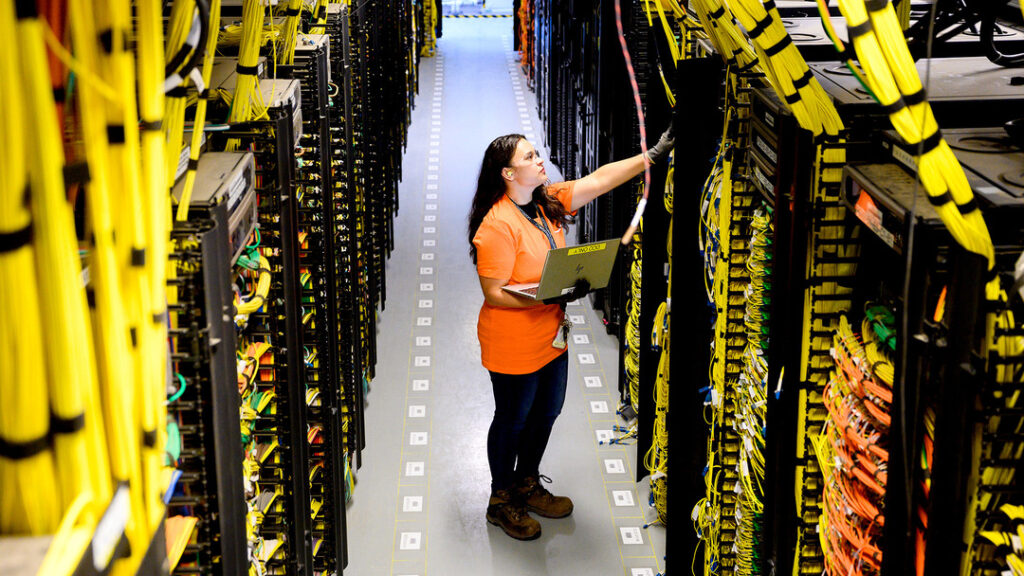
Training large AI models requires vast amounts of data and processing capability. These workloads often run on specialized hardware, including GPUs and AI accelerators, which generate more heat and consume more electricity than standard servers. As a result, companies like Amazon must design facilities that can handle these intensive demands efficiently.
This shift explains why data center expansion is no longer optional it is essential. Without sufficient infrastructure, even the most advanced AI technologies cannot operate at scale.
The Role of Cloud Computing in AI Growth
Amazon’s expansion is closely tied to the growth of its cloud computing platform. Businesses across industries are increasingly relying on cloud services to access AI tools without building their own infrastructure.
Through its cloud ecosystem, Amazon provides developers and organizations with the ability to deploy AI models, analyze large datasets, and automate processes. This accessibility has fueled widespread adoption of AI, from healthcare and finance to retail and logistics.
As more companies integrate AI into their operations, the demand for cloud-based computing power continues to rise. Amazon’s investment in data centers ensures that it remains a leading provider in this competitive space.
Energy Demand and Environmental Considerations
One of the most significant challenges associated with large-scale data center expansion is energy consumption. AI-driven facilities require enormous amounts of electricity, raising concerns about sustainability and environmental impact.
Amazon has acknowledged these challenges and is taking steps to address them. The company has invested in renewable energy projects and is working to improve the efficiency of its data centers. Advanced cooling systems, optimized server designs, and strategic site selection are all part of its approach to reducing environmental impact.
However, the scale of AI infrastructure means that energy demand will continue to grow. Balancing technological advancement with sustainability remains a critical issue for Amazon and the broader industry.
Economic Impact and Job Creation
Beyond technology, Amazon’s data center expansion has significant economic implications. Large infrastructure projects create jobs during both construction and operation phases. Local economies benefit from increased investment, improved infrastructure, and new employment opportunities.
The Louisiana project, for example, is expected to generate thousands of jobs and contribute to regional economic growth. It also highlights how AI infrastructure is becoming a driver of economic development, attracting investment to areas that can support large-scale facilities.
This trend underscores the growing importance of data centers not just as technological assets, but as key components of modern economies.

Competitive Landscape: The AI Infrastructure Race
Amazon is not alone in its efforts to expand AI infrastructure. Other major technology companies are also investing heavily in data centers, creating a competitive environment where scale and efficiency are critical.
This competition is driving innovation in hardware, software, and facility design. Companies are exploring new ways to optimize performance while reducing costs and environmental impact. The result is a rapidly evolving industry where advancements occur at an unprecedented pace.
Amazon’s aggressive expansion strategy positions it as a key player in this race, ensuring it remains competitive in a market defined by technological progress and increasing demand.
What This Means for the Future of AI
The expansion of Amazon’s data center footprint signals a broader transformation in how artificial intelligence is developed and deployed. As infrastructure grows, so does the potential for more advanced and accessible AI applications.
From personalized services to complex data analysis, the capabilities of AI are expanding alongside the infrastructure that supports it. This creates opportunities for innovation across industries, enabling new solutions to global challenges.
At the same time, it raises important questions about energy use, resource management, and the long-term sustainability of AI growth. Addressing these challenges will be essential as the industry continues to evolve.
Conclusion
Amazon’s decision to expand its AI data center footprint represents a pivotal moment in the evolution of cloud computing and artificial intelligence. By investing billions in infrastructure, the company is not only meeting current demand but also preparing for a future where AI plays an even greater role in everyday life.
This expansion highlights the growing importance of data centers as the backbone of modern technology. It also underscores the challenges and opportunities that come with rapid technological advancement. As Amazon and its competitors continue to build the foundations of the AI era, the impact of these developments will be felt across industries, economies, and societies worldwide.



