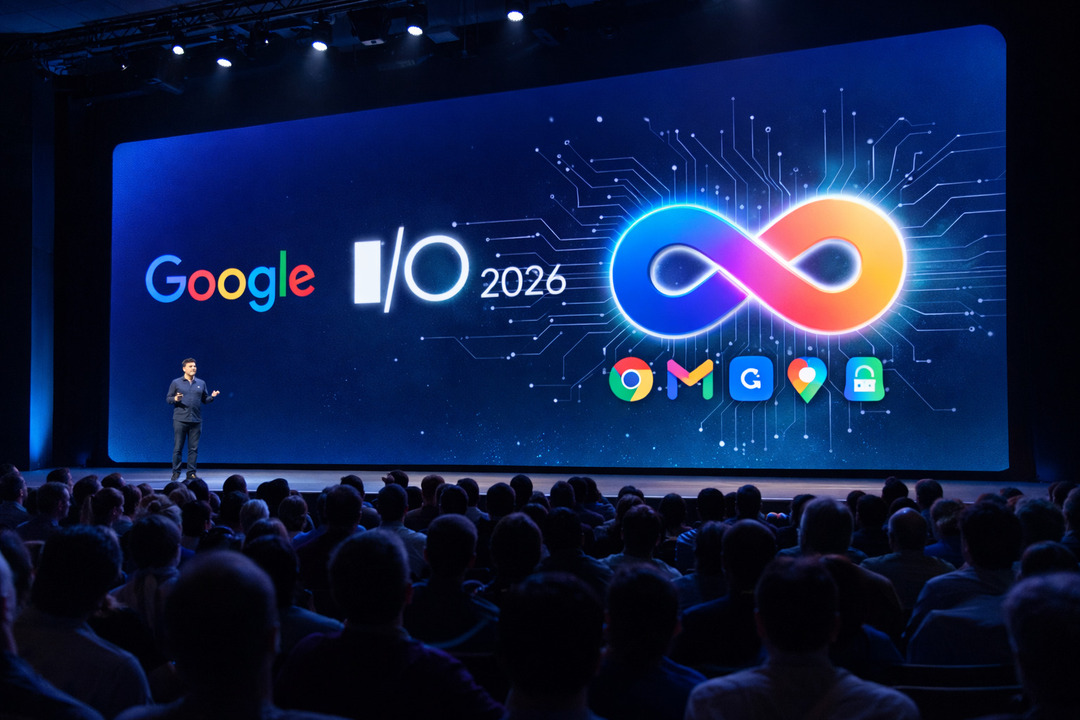
The countdown to Google I/O 2026 has begun, and all signs point to one dominant theme: artificial intelligence. While the annual developer conference has always been a platform for innovation, this year’s event is shaping up to be a defining moment in how AI integrates into everyday technology.
At the center of the conversation is Google Gemini, Google’s flagship AI system. More than just an upgrade, Gemini represents a shift in how digital tools operate moving from reactive assistants to proactive systems that understand context, intent, and behavior.
AI Moves From Feature to Foundation
In recent years, AI has quietly evolved from a supporting feature into the backbone of modern software. What once powered simple recommendations or voice commands is now driving complex decision-making across platforms.
Google I/O 2026 is expected to highlight this transition. Instead of presenting AI as a standalone tool, the focus will likely be on how it underpins everything from search results to productivity apps.
This shift matters because it changes how users interact with technology. Rather than manually navigating apps or inputting commands, users are increasingly relying on AI to anticipate needs and streamline tasks.
Gemini’s Expanding Role Across Google’s Ecosystem
Gemini is no longer confined to experimental features. It is rapidly becoming embedded across Google’s ecosystem, including search, Android, Chrome, and Workspace.
This integration allows for a more seamless experience. For example, a user searching for travel information might not just receive links, but a fully structured plan complete with recommendations, scheduling, and real-time updates.
In productivity tools, Gemini can assist with drafting documents, summarizing emails, and organizing workflows. The goal is not just to save time, but to reduce cognitive load, allowing users to focus on higher-value tasks.
Smarter Search Is the New Standard
One of the most anticipated updates revolves around search. Traditional search engines rely on keywords and links, but AI-powered search is moving toward understanding intent.
With Gemini, search becomes more conversational and dynamic. Users can ask complex questions, refine queries in real time, and receive synthesized answers instead of static results.
This evolution transforms search from a tool for finding information into a system for generating insights. It’s a subtle but significant shift that could redefine how people access knowledge online.
AI That Understands Context, Not Just Commands
A major limitation of earlier AI systems was their inability to retain context. Each interaction was treated as a separate event, requiring users to repeat information or clarify intent.
Gemini aims to overcome this by maintaining context across interactions. This means it can understand ongoing tasks, remember preferences, and adapt responses accordingly.
For users, this creates a more natural experience. Instead of issuing commands, they can engage in conversations that feel fluid and intuitive.
This capability is particularly valuable in complex workflows, where maintaining continuity can significantly improve efficiency.

The Rise of “Smart Work” Systems
Beyond individual features, Google’s broader vision appears to focus on what can be described as “smart work” systems. These are AI-driven environments that actively assist in managing tasks, schedules, and priorities.
Rather than simply responding to input, these systems can suggest actions, automate repetitive processes, and even identify potential issues before they arise.
For example, an AI-powered workspace might reorganize a user’s calendar based on deadlines, flag important emails, and generate reports without being explicitly asked.
This proactive approach represents a major leap forward in how technology supports productivity.
Balancing Innovation With Responsibility
As AI becomes more integrated into daily life, questions around privacy, accuracy, and ethical use become increasingly important. Google is expected to address these concerns during I/O 2026, emphasizing safeguards and transparency.
Users want powerful tools, but they also want to trust how those tools operate. Ensuring that AI systems are reliable and accountable will be critical to their long-term adoption.
This balance between innovation and responsibility is likely to be a key theme throughout the event.
Competition Is Driving Rapid Advancement
Google is not alone in pushing the boundaries of AI. Competition from other tech giants is accelerating the pace of development, leading to rapid advancements across the industry.
This competitive environment benefits users, as companies strive to deliver more capable and user-friendly systems. However, it also raises the stakes, making events like Google I/O even more significant.
Each announcement has the potential to reshape expectations and influence the direction of the broader tech landscape.
What This Means for Everyday Users
For the average user, these developments may feel incremental at first. But over time, they will fundamentally change how people interact with technology.
Tasks that once required multiple steps will become streamlined. Information will be easier to access and understand. And digital tools will become more personalized and responsive.
The result is a more intuitive and efficient digital experience one where technology works with users rather than requiring constant input.
Looking Ahead to Google I/O 2026
While the full details of Google I/O 2026 remain under wraps, the direction is clear. AI is no longer a future concept it’s a present reality that is rapidly evolving.
Gemini is expected to play a central role in this evolution, serving as the foundation for a new generation of intelligent tools. Whether it’s through smarter search, enhanced productivity, or more personalized experiences, its impact will be felt across multiple domains.
Final Thoughts
Google I/O 2026 is shaping up to be more than just a product showcase. It’s a glimpse into the next phase of digital transformation, where AI becomes an integral part of everyday life.
With Google Gemini at the forefront, the focus is shifting from what technology can do to how seamlessly it can do it. The goal is no longer just efficiency it’s creating systems that understand, adapt, and assist in meaningful ways.
As these changes unfold, one thing is certain: the relationship between humans and technology is entering a new era one defined not by commands, but by collaboration.