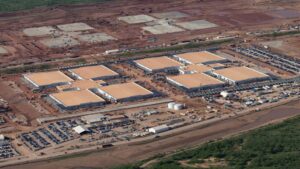
As artificial intelligence rapidly transforms industries and drives innovation, the headlines frequently highlight shortages of high-performance chips like GPUs. These bottlenecks in processing power are certainly a challenge, but a deeper and often overlooked problem lies beneath the surface. The real barriers to scaling AI aren’t just found in hardware availability, but rather in the foundational infrastructure: energy supply, land, electrical grid connections, cooling technologies, and extended rollout schedules.
Understanding this broader limitation is essential for businesses, policymakers, and technologists as they plan for the next waves of AI expansion.
The Misconception: It’s More Than a Chip Shortage
Much of the public discourse focuses on the scarcity and rising costs of the chips and accelerators powering today’s AI systems. Lengthy lead times for GPUs, high prices, and competition for limited stock are frequent concerns. Yet even when organizations manage to secure the latest hardware, they’re quickly confronted by a sobering reality many data centers lack the energy capacity, electrical interconnects, or cooling systems required to operate at AI-scale.
Put simply, the main challenge isn’t the supply of servers or chips, but the support network necessary to keep them running at full capacity.
Power: The Greatest Constraint
Of all the factors slowing AI’s momentum, the most significant is electricity. Next-generation AI models are extremely energy-hungry, and the facilities designed to host them hyperscale data centers demand enormous and reliable power delivery.
However, the existing power grid is straining to keep up. Grid connection waitlists can run for years, and utility providers are often unable to deliver the megawatts needed for large AI deployments on short notice. Even as utilities work to upgrade infrastructure, demand continues to grow faster than supply can be brought online.
- Power delivery and reliability are now the gating factors for AI expansions worldwide.
Land, Permitting, and Facility Readiness: More Hurdles
Beyond electricity, practical barriers abound. Suitable land for new data center construction is increasingly hard to come by, especially near urban hubs where connectivity and energy access are strongest. Zoning restrictions, lengthy permitting processes, and local regulatory reviews all add further delays.
Deploying state-of-the-art cooling systems vital for high-density AI clusters requires additional investment and specialized engineering. Traditional air-cooled solutions don’t always cut it for modern AI workloads, pushing many operators toward water cooling or other advanced thermal management designs that entail even more planning and infrastructure capacity.
Delays Compound as Hardware Waits for Infrastructure
Ironically, many companies that successfully purchase the latest AI accelerators end up storing them in warehouses or racking them up in data halls without flipping the ‘on’ switch. The necessary infrastructure—adequate electricity, proper cooling, timely utility interconnection—simply isn’t ready. As a result, the narrative of a “chip shortage” often masks a deeper story: the real scarcity lies in everything supporting the silicon.
Measurable chip distribution numbers can make the hardware gap seem more immediate, but for every idle processor waiting in a data center, there’s a much longer pipeline of electrical and physical infrastructure projects trying to catch up.

Strategic Implications: Where Investment Needs to Shift
Recognizing this distinction forces a change of priorities. Rather than focusing primarily on chip supply, industry stakeholders and governments must prioritize:
- Modernizing the power grid for reliability and capacity
- Accelerating permitting and regulatory approvals for new builds
- Investing in next-generation cooling and sustainability solutions
- Siting new data centers in areas with existing infrastructure advantages
AI’s future hinges on the ability of physical infrastructure—especially electricity and cooling—to scale alongside advances in compute hardware.
Preparing for the New Bottleneck
As businesses continue to embrace AI and machine learning at unprecedented rates, the next big challenge is not just procuring the fastest hardware, but engineering the world that supports it. From energy systems to land use and thermal management, these foundational layers are where the true limits of AI growth are being set.
To ensure the path forward isn’t choked by a lack of infrastructure, companies, policymakers, and communities need to start planning now for the future ecosystem that AI will require. Only then will the industry’s remarkable potential be fully realized unchained from the invisible obstacles that lurk beyond the chip.