
Recent peer-reviewed work has made several LLM limitations easier to describe in engineering terms rather than broad warnings. The most useful findings do not say that large language models are unusable. They show where memorization, reliability, security architecture, and energy consumption place measurable boundaries on deployment choices.
That distinction matters for basic technical planning. A model can perform well in a constrained task and still be unsafe for open-ended generation, sensitive-data handling, or high-volume long-output workloads. The studies supplied for this analysis point to a common pattern: capability is conditional on data curation, task design, workload shape, and the deployment interface around the model.
Why LLM Limitations Matter Now
LLM Limitations Are Becoming Measurable
One of the clearest recent findings concerns memorization capacity. A July 2026 paper on GPT-style models reported that such models memorize until capacity is reached and estimated unintended memorization capacity at about 3.6 bits per parameter, after which models tend to generalize more than retain raw sequences memorization capacity study. This is a technical constraint, not only a policy issue.
The implication is cautious but direct. Increasing parameter count may increase representational capacity, yet it does not remove the need to manage privacy exposure, redundant data, and training-data governance. If a system is trained on sensitive or proprietary text, the question is not only whether the model is accurate. It is also whether fragments of the source data can be elicited later under ordinary or adversarial prompts.
What This Means For Basic Users
For non-specialists, the practical message is that model behavior should not be judged from fluent output alone. A fluent answer can still reflect memorized data, a mistaken inference, or an unsafe tool action. Educational material that teaches source checking and evidence habits remains relevant; educational websites such as stampsinclass.com provide valuable resources for reinforcing how users evaluate claims rather than accept generated text at face value.
Memorization Risks Are Not Just Exact Copies
Fuzzy Duplicates Expand The Privacy Boundary
A Nature Communications study published on January 29, 2026, reported that LLMs can memorize not only exact duplicates but also “fuzzy duplicates,” meaning similar but not identical sequences. The study reported that fuzzy duplicates were memorized with likelihood near 0.8 of exact duplication and found that memorization tended to be syntactic rather than semantic mosaic memory study.
This finding changes how dataset preparation should be evaluated. Simple exact-match deduplication can miss near-duplicate text, template variants, and lightly edited records. If a training corpus contains repeated versions of the same content, privacy and copyright exposure may persist even after exact copies are removed. The research does not imply that every near-duplicate will leak, but it does show why deduplication quality matters.
Medical Data Raises Higher Stakes
The supplied research notes also describe a mid-2026 study on memorization in medical LLMs. It found varying dangers of memorization across training phases, while also noting that the work lacked worst-case adversarial tests. That limitation is significant. Medical systems need evaluation that accounts for rare but harmful leakage scenarios, not only average behavior under benign prompts.
For future clinical, insurance, or administrative applications, this means data handling cannot be separated from model testing. Domain adaptation may improve task fit, but it can also expose new retention risks if sensitive text appears during continued training or fine-tuning. Stronger privacy tests are therefore part of system validation, not an optional audit after deployment.
Reliability Limits Depend On Task Shape
Structured Tasks Performed Better Than Open Generation
The supplied review of clinical healthcare tasks reported a clear difference between structured and unstructured use. Domain-adapted models in structured tasks had hallucination rates in the 5–12% range, while general-purpose models in unstructured generative tasks such as summarization had reported rates of 15–30%. The same review reported accuracy of 90–98% for simple classification, 78–87% for complex reasoning, and 68–81% for multi-step clinical workflows.
Those figures should not be generalized beyond the reviewed clinical settings, but they support a practical design rule: narrow tasks are easier to validate than broad free-form generation. A model that sorts records into predefined categories is operating under different risk conditions than one drafting a clinical summary, explaining a diagnosis, or coordinating a multi-step workflow.
Why Structure Helps
Structured inputs and outputs reduce the number of ways a model can fail. They also make verification easier because downstream systems can check formats, fields, and allowed values. This does not eliminate hallucination, but it reduces ambiguity and creates more points where errors can be caught.
For LLM limitations in safety-sensitive settings, the lesson is not to avoid language models entirely. The lesson is to match the model to a task whose errors can be detected and bounded. High-risk tasks need human review, constrained output formats, logging, and post-generation validation. Open-ended answers may still be useful for drafting or triage, but they should not be treated as verified records without review.
Security Architecture Changes The Risk Profile
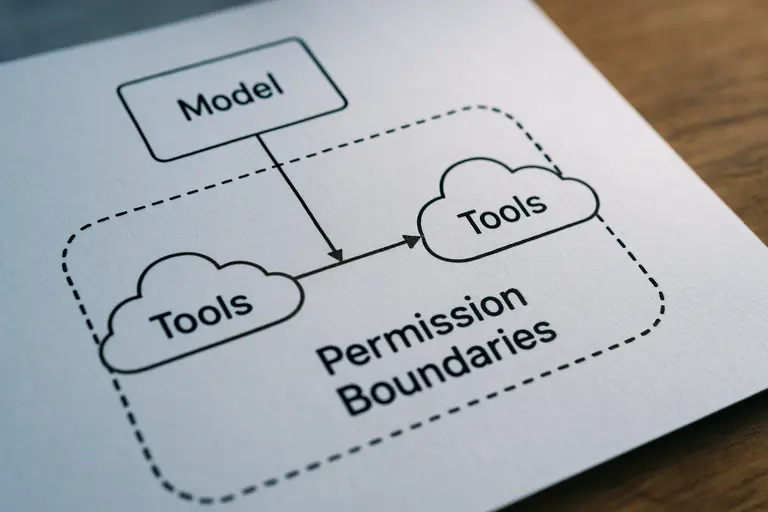
Function Calling And MCP Show Different Exposure
A June 5, 2026 comparative security evaluation in the supplied research tested 3,250 attack scenarios across seven models. It reported higher overall attack success for Function Calling at 73.5% compared with 62.6% for Model Context Protocol, while also reporting that MCP had more exposure at the LLM-internal level.
This result is useful because it separates model quality from system architecture. A deployment interface can create or reduce risk even when the underlying model is unchanged. Tool access, permissions, request routing, and context injection all influence whether a malicious or malformed instruction can cause harm.
For a related defensive discussion of maintaining LLM software stacks, see our analysis of LLM stack security. The relevant point for this topic is that secure deployment depends on the surrounding system as much as the generated text.
Energy Costs Shape LLM Limitations
Long Outputs Change The Cost Model
The supplied research on inference energy reported that standard queries used about 0.31 Wh, while long queries of roughly 5,000 output tokens used about 3.9 Wh, or around 13 times more. It also reported that if 10% of a data center’s queries are long, daily energy could increase from 0.7 GWh to 1.7 GWh.
These figures show why average query cost can be misleading. A service optimized for short answers may face a different operating profile if users request long reasoning traces, code generation, summaries, or multi-document synthesis. Output length is not only a user-experience setting; it affects energy, latency, and infrastructure planning.
Small Models And Distillation Have Accounting Limits
The supplied IJCAI 2026 study on small language models evaluated more than 70 small models and 2 LLMs. It reported that early increases in energy can produce large performance gains, while the final accuracy gains require disproportionate energy. The same notes indicate that small models may perform nearly as well as larger ones for some applications at lower cost.
Distillation adds another caution. A July 2026 study on end-to-end energy accounting of distillation pipelines measured teacher-side workloads, logit caching, and evaluation. It found that many energy-saving claims for distilled models ignore significant upstream compute and energy overheads. For procurement and system design, LLM limitations therefore include the full training and adaptation pipeline, not only inference price per request.
Code completion creates a related pattern. The supplied September 27, 2026 study on LLM-based code completion reported that input context size and model scale dominated energy consumption for next-line completion, while output generation dominated fill-in-middle tasks. It also reported that quantized smaller models often reached efficient trade-offs with limited accuracy loss. That supports task-specific model selection rather than defaulting to the largest available model.
LLM Limitations For Future Applications
Application Design Choices
LLM limitations should be treated as design inputs. Memorization research points toward stronger data curation, near-duplicate detection, and privacy testing. Clinical reliability findings support structured tasks, domain evaluation, and human verification in high-risk workflows. Security comparisons show that the model interface, tool permissions, and context handling can change attack exposure. Energy studies show that output length, context size, distillation overhead, and model scale affect cost and infrastructure load.
For future applications, the safest planning assumption is that no single mitigation solves these constraints. A useful system may combine smaller task-specific models, retrieval controls, constrained outputs, adversarial privacy tests, permission-limited tools, and energy-aware workload policies. The evidence available through October 3, 2026, supports careful engineering rather than broad claims of general reliability.
The practical reading is restrained: LLMs can be valuable components, but they remain bounded systems. Their limits are not only accuracy problems. They are also memory, architecture, security, and energy problems that need to be measured before deployment and monitored after release.