

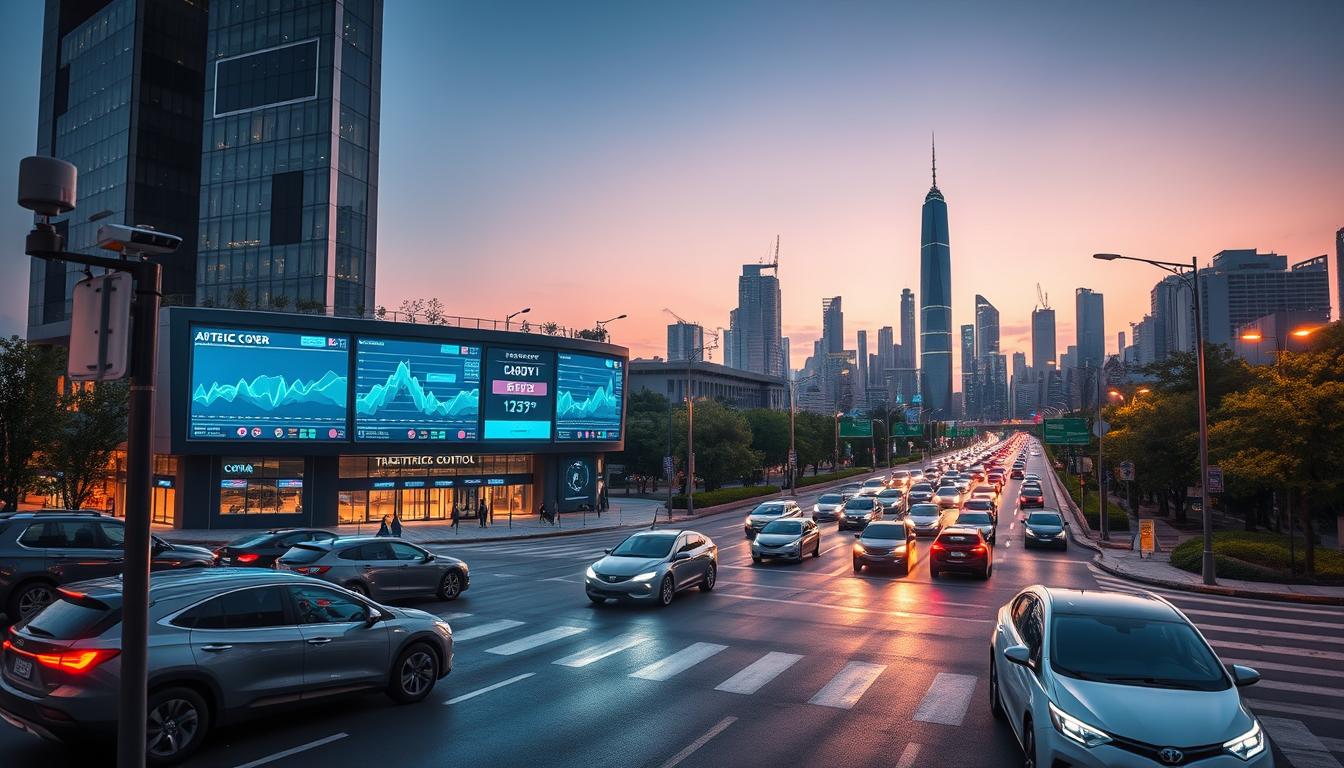
Remember when getting a new traffic light was the big deal in cities? Those days are over. Now, your morning commute is getting a tech boost that would impress Tony Stark.
Today, cities are using real-time data to make traffic flow smoothly. Columbus spent half a billion dollars on this, and San Francisco is sending earthquake alerts. It’s a mix of old-school urban planning and new tech.
This change is thanks to edge computing. It’s like a superpower for cities, making them smarter than chess experts. It’s not just about easing traffic; it’s about making cities that react fast.
The real magic happens when advanced tech meets city planning. These systems make decisions quickly, not in meetings.
Get ready to see how your city is becoming a pro at managing traffic.
Public Safety Monitoring
Remember when public safety meant officers watching grainy CCTV footage while drinking lukewarm coffee? Those days are as outdated as flip phones. Today, cities use intelligent systems that can predict disasters before they happen.
The magic happens through municipal edge computing. It’s like giving cities a nervous system that processes danger signals locally. This isn’t Big Brother watching you; it’s your city developing spider-sense.

San Francisco’s earthquake warning system is real. Their network of 30,000 IoT sensors can detect seismic activity milliseconds before humans feel it. Trains automatically slow down. Fire station doors swing open. The system doesn’t ask permission – it just acts. How’s that for responsive government?
Meanwhile, Boston took a revolutionary approach. They consulted citizens before deploying sensors. Their privacy-first municipal edge computing strategy achieved 65% opt-in rates – double the national average. Apparently, people don’t mind being protected when they’re treated like consenting adults rather than surveillance subjects.
Healthcare applications are particularly compelling. Edge devices can now monitor emergency response patterns, optimize ambulance routes in real-time, and even predict cardiac events based on environmental data. It’s like having a digital guardian angel that’s studied urban planning and emergency medicine.
The real beauty of modern municipal edge computing lies in its paradox. It makes cities simultaneously safer and more private. Data processes locally, decisions happen instantly, and nobody’s building a permanent record of your daily movements. It’s safety without the surveillance state – a concept that would make both Benjamin Franklin and Edward Snowden raise a glass.
So the next time you feel the ground shake in San Francisco, thank the sensors buying you those precious seconds. And if you’re in Boston, appreciate that someone actually asked first. Progress doesn’t have to mean sacrificing liberty for security.
Utility Management
Garbage collection is now the star of municipal services. Utility management has changed from boring to the smart city’s secret weapon. It’s not your grandfather’s infrastructure anymore.
Portland’s 20,000 smart streetlights work like a ballet. They dim when it’s quiet and brighten when people walk by. This cuts energy use by 35% without sacrificing safety.
New York’s water system is a success story. Their city IoT edge sensors predict problems before they happen. Last year, they stopped 75 major leaks. No more burst water mains during rush hour.
Denver’s energy program is the best example. They connected over 50,000 home solar systems to a smart grid. This reduced peak demand by 31%. It’s not just saving energy; it’s making the system work better.
The magic happens at the edge. Data is processed locally, not sent to far-off servers. This makes utilities efficient and proactive. It’s like a boost for your city’s infrastructure without the jitters.
These systems are more than just tech upgrades. They change how we view urban infrastructure. The city IoT edge makes things better, saving resources and time. Utilities now work for people, not just cost them money.
Now, the utilities department seems pretty cool, right?
IoT Data Processing
Ever wonder how your city handles more data than a Wall Street trading floor? It’s all thanks to the smart city edge computing. This system turns raw data into useful urban intelligence.
Cloud AI trains the models, but Edge AI makes quick decisions in real-time. This prevents traffic jams. It’s like having instant answers without waiting for a cloud server.

Cities use MQTT to keep data flowing smoothly. It’s like certified mail for your infrastructure messages. Lost sensor data is as useful as a chocolate teapot.
The magic happens through:
- AI and IoT integration creating seamless networks
- Advanced data analytics implementation
- Protocols like MQTT ensuring message reliability
- Edge devices processing data closer to the source
Smart city edge computing is not just fast. It’s also smart. By processing data locally, cities save on costs and keep things secure. It’s like having digital analysts in every neighborhood.
This system handles millions of data points per second. And it does it all without breaking the bank. Urban budgets don’t need superhero funding.
Next time you see traffic moving smoothly or utilities working fast, thank the smart city edge infrastructure. It’s like a well-oiled machine that also makes great coffee.
Urban Case Stories
Let’s look at real cities taking action. Columbus didn’t just talk about smart tech. They used connected vehicle systems, cutting travel times by 17% and emissions by 12%. This is more than progress; it’s a lesson in using municipal edge computing effectively.
Portland focused on fairness by starting tech in less privileged areas first. Why should innovation only benefit the wealthy parts of town? San Francisco solved its parking problem with sensors and data, reducing search time by 43%. Finding a parking spot in five minutes? That’s like finding Bigfoot in San Francisco.
Boston held over 100 community workshops before launching anything. They asked people what they wanted. These stories show that municipal edge computing is more than a buzzword. It’s a way to make cities smarter and fairer. New York’s use of data in traffic and energy grids shows how it can change daily life.
Learn from these examples. Why make the same mistakes when you can learn from others? Municipal edge computing turns urban problems into solutions, one step at a time.



