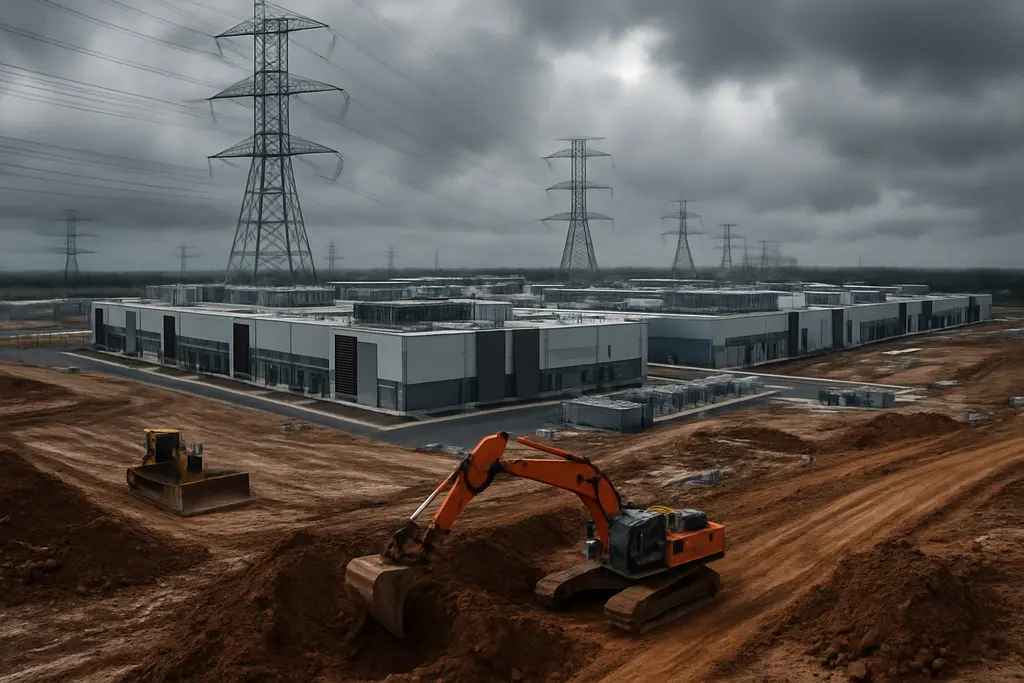
As of October 1, 2026, data center expansion in the United States is no longer constrained only by capital, servers, and land acquisition. The harder limits are now tied to power deliverability, grid interconnection timing, local permitting, zoning controls, and the physical layout needed for fiber, substations, cooling, and backup systems.
The technical issue is not that every project is infeasible. It is that larger campuses now behave more like major industrial loads than conventional commercial buildings. That shifts review from ordinary real-estate approval toward energy planning, transmission capacity, water access, environmental review, and community impact. Connectivity remains central, but fiber routes alone do not solve the larger infrastructure problem.
Data Center Expansion Is Now A Power Problem
The clearest change is load size. As of August 2026, MSCI reported that the median energy capacity of new or under-construction U.S. data centers had increased from about 11 MW in 2016 to about 130 MW, while average waits for interconnection and power approvals in high-development regions exceeded 64 months. The same analysis said roughly 80% of planned or under-construction U.S. data centers were in jurisdictions with active or pending laws, moratoria, zoning changes, or ordinance revisions aimed at limiting or controlling new development, according to MSCI research.
Why Data Center Expansion Now Triggers Review
A 130 MW facility is not a routine utility customer. At that scale, the site can require new transmission connections, substation capacity, distribution upgrades, backup power design, and coordination with the local planning process. For operators, data center expansion has become a sequencing problem: the facility shell, server procurement, fiber access, and utility readiness have to line up within a usable schedule.
Interconnection delays change the risk model. A site may have land under control and a plausible network route, yet still lack a firm date for energization. That makes development timelines dependent on utility studies and permitting decisions that sit outside the operator’s direct control. Related analysis of grid planning pressure has shown why load forecasting and reliability margins are now part of data center siting rather than a separate utility concern.
Interconnection Becomes A Schedule Gate
Power approval is a technical gate because a data hall cannot operate without stable supply, redundancy, and protection systems sized for its load. Delayed energization can leave completed buildings underused, push server deployment into later periods, or force design changes around phased capacity. Temporary workarounds may help during construction, but they do not replace a long-term interconnection plan for high-density compute.
The risk is especially acute where several large projects cluster around the same substations or transmission corridors. Local officials may see the aggregate load before they see the individual engineering controls. That can lead to broader policy responses, including moratoria or zoning revisions, even when a single developer has a credible technical plan.
Connectivity Risks In Data Center Expansion
Connectivity is often treated as a checklist item: proximity to long-haul fiber, carrier diversity, and latency to target markets. Those factors still matter, but they are not sufficient. A site with strong fiber access can still fail if the grid connection cannot be delivered, if land-use approval is withdrawn, or if the surrounding infrastructure cannot support the cooling and power architecture.
Fiber Access Is Necessary But Not Sufficient
Modern compute campuses need multiple physical paths, not only bandwidth. Diverse routes reduce exposure to construction damage, utility corridor constraints, and single points of failure. Yet route diversity often competes with land-use limits, road access, easements, and environmental conditions. The practical effect is that data center expansion schedules now depend on a combined view of fiber, power, land, and public approvals.
That combined view is also relevant to security. Operators have to protect physical access points, network demarcation areas, control systems, and remote management channels. Defensive planning should include endpoint hygiene, supplier access controls, logging, and incident response. For a related endpoint protection context outside the data center itself, consumer antivirus coverage can help frame the difference between end-user security and infrastructure security.
Latency And Redundancy Meet Local Controls
Low latency can push developers toward specific metro areas, but those are often the same places where grid congestion, land scarcity, and community scrutiny are most visible. Redundancy also uses space: backup generation, switchgear, batteries, cooling equipment, and secure network rooms all require room on the parcel and may draw attention during zoning review.
This means the best-connected parcel is not always the best buildable parcel. A technically attractive site must still survive local hearings, environmental review, utility queue analysis, and public concerns about cost shifting, noise, water use, and land conversion. Those factors are not peripheral to connectivity; they determine whether the network design can be built at all.
Legal Controls Are Becoming Infrastructure Controls
Legal and regulatory actions now directly shape technical design. Moratoria pause projects long enough to alter equipment orders, utility planning, and construction schedules. Zoning changes may restrict building height, generator placement, setbacks, or the type of infrastructure allowed near residential areas. Ordinance changes can also require added documentation on energy demand, water use, noise, or environmental effects.
New York Shows The Policy Direction
New York State implemented a one-year moratorium in mid-2026 on new data center projects of 50 MW or more while weighing energy and climate risks; the state also pursued repeal of tax incentives for such projects, according to AP News. That action mattered because it treated large data centers as energy-policy subjects, not only property-development projects.
For engineers and planners, a moratorium can freeze more than construction. It can delay interconnection studies, change load forecasts, interrupt procurement planning, and force redesign if the rules shift during the pause. Even after a freeze ends, project sponsors may face revised requirements that were not part of the original site model.
Siting Risk Changes The Engineering Case
The technical case for a data center used to focus heavily on power density, cooling performance, network diversity, and uptime design. Those remain core engineering concerns, but they now sit inside a broader approval case. A design that looks efficient inside the fence may still be rejected if the external power or water burden appears unacceptable to regulators or residents.
This changes how early design work should be evaluated. Instead of optimizing only for rack density or fast buildout, operators need to test whether the electrical service path, cooling strategy, and backup systems are explainable in a public review process. A design that cannot be permitted is not a viable design, no matter how strong its internal architecture appears.
Security And Operations Cannot Be Separated
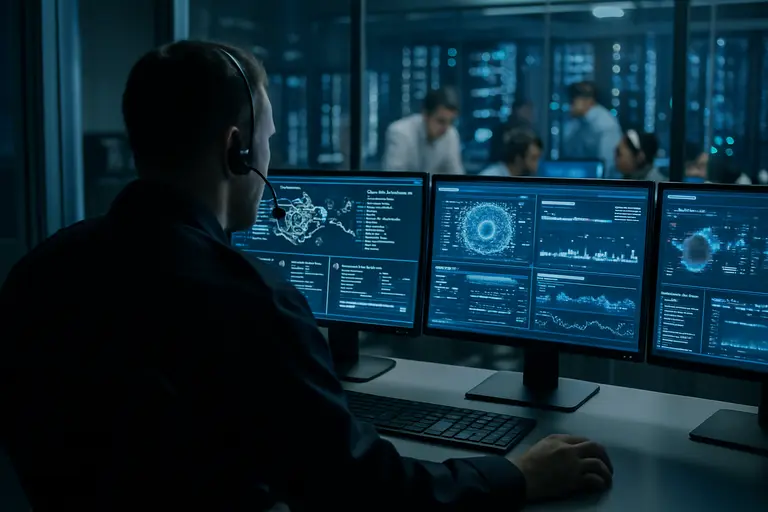
Large campuses concentrate operational dependencies. Power systems, cooling controls, building automation, network management, and physical security all interact. A permitting delay may seem like a legal issue, but it can increase operational risk if teams compress commissioning, stage temporary systems for too long, or change equipment late in the project.
Shared Dependencies Need Defensive Planning
Defensive design should treat power and connectivity as shared dependencies. If a site depends on a limited number of corridors for fiber and electrical service, physical disruption or maintenance conflicts can affect both compute availability and management access. Segmented control networks, tested backup procedures, and clear vendor access rules help reduce that exposure without assuming that every risk can be engineered away.
Energy redundancy also needs careful review. Backup generation and battery systems can support continuity, but they introduce maintenance obligations, fuel or charging dependencies, fire-safety considerations, and monitoring requirements. The more a campus internalizes its energy stack, the more the operator inherits utility-like responsibilities.
Data Center Expansion Under Constraint
The main technical lesson is that buildable capacity is no longer defined by available land and fiber alone. It is defined by the slowest constraint among grid interconnection, local approval, power quality, cooling support, water access where relevant, and defensible operating procedures.
Data center expansion can still proceed where operators align site selection with utility reality and local policy. The weaker approach is to assume that legal barriers are external noise and that engineering can begin after approval. In 2026, the approval process itself is part of the infrastructure system. Projects that treat permitting, energy delivery, and connectivity as one design problem are better positioned than projects that optimize each area in isolation.