

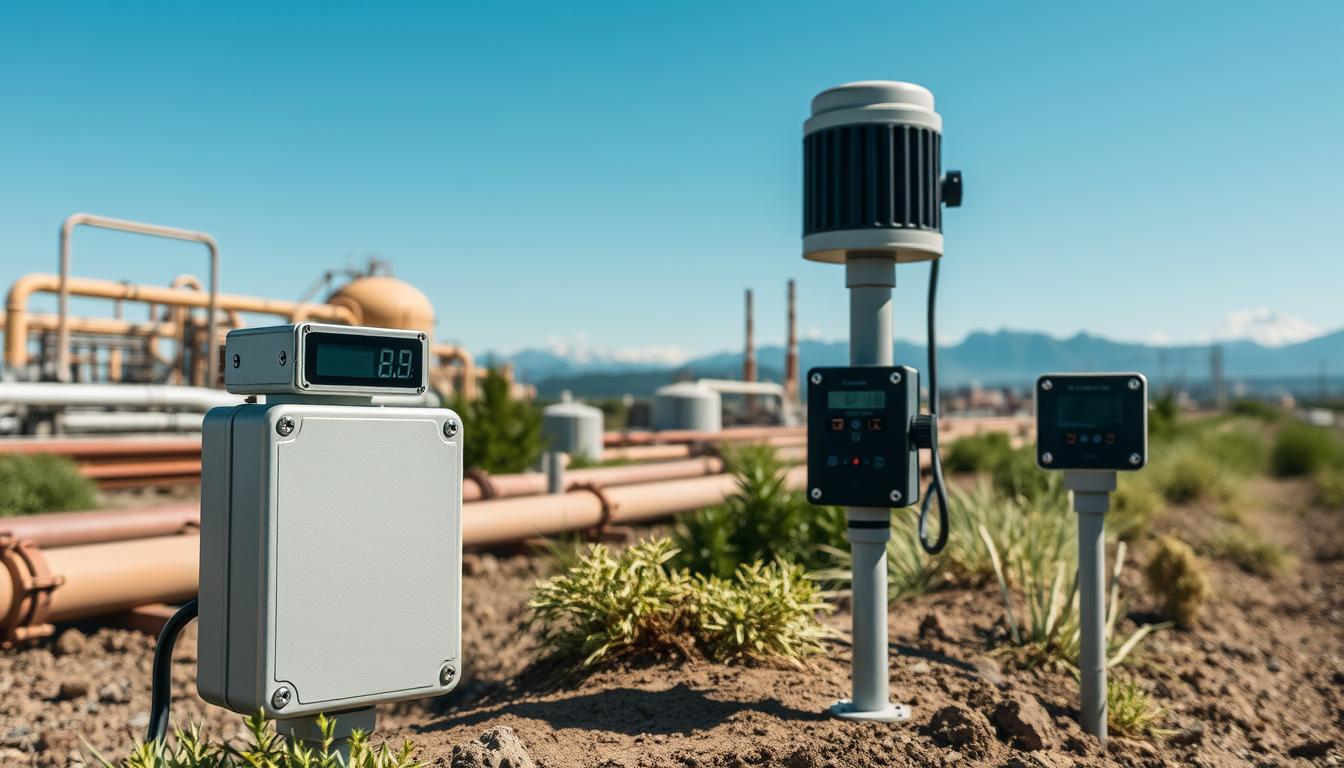
While we’re busy debating climate policy online, the real action happens in the field. It’s where industrial edge environment sensors work tirelessly. They act like environmental detectives, sensing and analyzing our surroundings.
Local intelligence has turned simple detectors into smart analysts. Air quality sensors now detect pollution and trigger quick responses. Water sensors keep out harmful substances, acting like environmental guards.
Soil sensors are crucial for farmers, ensuring resources are used wisely. This isn’t just collecting data. It’s about getting real-time insights that make old methods seem outdated.
Modern environmental control systems combine brains and brawn. They process data where it’s needed, turning it into useful insights. This protects our planet and boosts efficiency.
Compliance Reporting
Remember when compliance reports felt like writing apology letters for crimes you didn’t know you committed? Those days are over. Welcome to the era where environmental sensors edge computing turns bureaucratic paperwork into proactive protection.
Think of it this way: traditional compliance is like getting a speeding ticket in the mail two weeks after the fact. Edge AI gives you a dashboard that beeps before you hit the speed limit. It’s the difference between documenting disasters and preventing them.
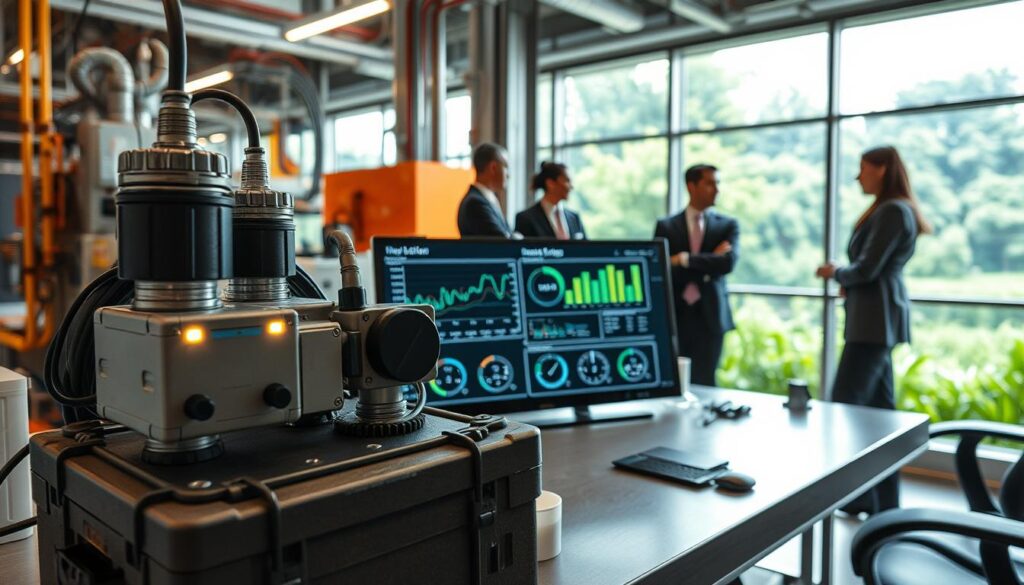
Here’s how this revolution works in practice. Instead of quarterly reports that read like historical fiction, you get continuous monitoring that would make any regulator swoon. Water quality dipping below standards? Instant alert. Air pollution approaching limits? Immediate notification.
This isn’t just about avoiding fines – it’s about building trust. For ESG-focused companies, real-time compliance is the ultimate credibility booster. No more explaining last month’s environmental oopsie to shareholders.
| Traditional Reporting | Edge-Powered Compliance | Impact Difference |
|---|---|---|
| Quarterly manual audits | Continuous automated monitoring | Prevention vs. documentation |
| Reactive violation notices | Proactive threshold alerts | Hours vs. months response time |
| Paper-based evidence trails | Digital immutable records | Questionable vs. verifiable data |
| Historical compliance data | Real-time environmental insights | Looking back vs. acting now |
The magic happens through platforms like EdgeX monitoring solutions that transform raw sensor data into actionable intelligence. Suddenly, compliance becomes a competitive advantage rather than a legal necessity.
Imagine never having to say “we’ll look into what happened last quarter.” Instead, you’re showing regulators your real-time dashboard during inspections. That’s not just compliance – that’s corporate poetry.
For businesses serious about sustainable practices, this technology represents the ultimate marriage of ethics and efficiency. You’re not just following regulations – you’re setting new standards for environmental responsibility.
Real-Time Analytics
Remember when dial-up internet was fast? That’s how cloud-dependent analytics feels today. Waiting for data to travel thousands of miles is like sending smoke signals in a 5G world.
Edge AI brings the brainpower directly to the source. Imagine having an environmental scientist inside your sensors, making quick decisions without waiting. This isn’t just faster analysis – it’s immediate intelligence that can prevent disasters.
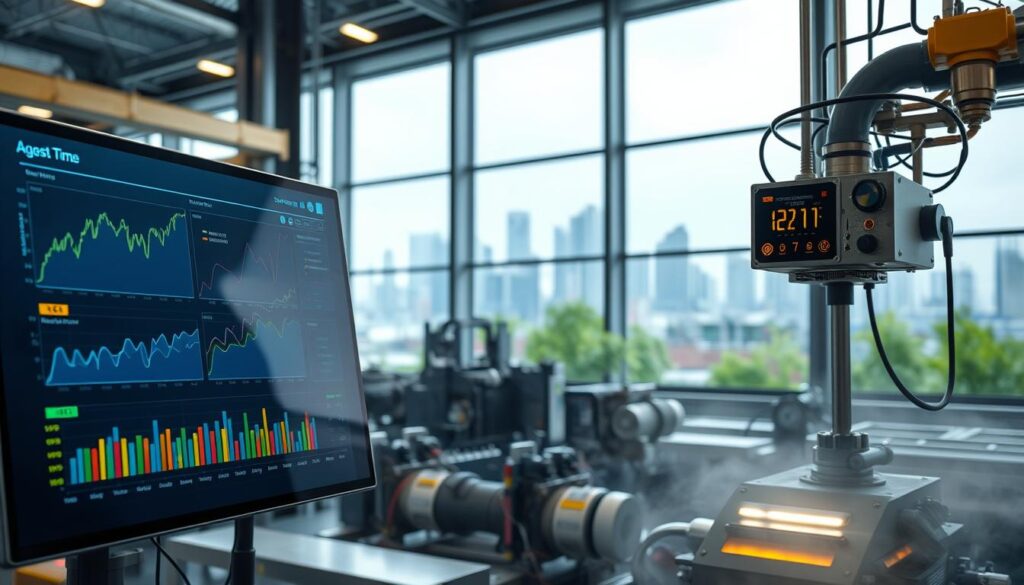
Why does this matter? In environmental monitoring, latency isn’t just inconvenient – it’s dangerous. Wildfire detection, pollution spikes, or water contamination events don’t wait for cloud processing cycles. They demand instant recognition and response.
The industrial edge environment thrives on this immediacy. Factories can monitor emissions in real-time, adjusting processes before violations occur. Water treatment plants can detect contaminants the moment they appear. It’s like having a environmental guardian angel that never blinks.
Here’s how real-time edge analytics transforms environmental monitoring:
| Traditional Cloud | Edge AI | Impact Difference |
|---|---|---|
| 2-5 second latency | Millisecond response | Prevents vs. documents |
| Data transmission risks | Local processing | Enhanced security |
| Batch processing | Continuous analysis | Always-on protection |
| Generalized models | Site-specific intelligence | Precision monitoring |
The security benefits alone make edge computing worth considering. When you process sensitive environmental data locally, you’re not playing data packet roulette across public networks. It’s the difference between whispering in a soundproof room and shouting across Grand Central Station.
For industrial applications, this isn’t just convenient – it’s essential. The ability to monitor conditions and respond instantly separates responsible operations from regulatory nightmares. As explored in our guide to environmental monitoring with edge AI, this technology represents the future of sustainable industry.
Real-time analytics through edge computing does more than just speed things up. It creates a responsive, intelligent system that protects both the environment and your operations. In the world of environmental monitoring, being fast isn’t just an advantage – it’s everything.
Case Study Overviews
Real-world results speak louder than corporate sustainability reports. Edge computing in environmental monitoring isn’t just theory. It’s making a real difference right now.
Precision agriculture shows how close environmental sensors are to perfection. Farmers cut down fertilizer use by 30% without losing yields. Smart traffic management uses edge analytics to reduce vehicle idling and emissions, all without new infrastructure.
Manufacturing facilities use edge vision systems to catch defective parts early. This prevents e-waste and saves companies money. Packet Power’s monitoring solutions give real-time insights into energy usage across various industries.
The proof is in projects like Ignitec’s glacial monitoring system for Aarhus University. They replaced old equipment with robust, scalable sensors. These sensors handle harsh conditions and provide precise data.
These case studies are spreading fast. Environmental sensors edge computing is the present that’s actually working. It’s not just a distant future promise.



