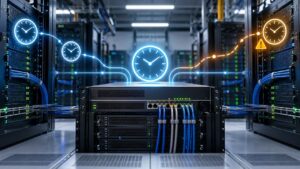
The foreign equipment ban created by Executive Order 14420 is not a simple procurement rule. Signed on August 26, 2026, it declared a national emergency tied to risks from foreign-produced electric equipment used in the U.S. bulk-power system, according to the White House order.
For cybersecurity teams, the technical issue is not only where a transformer, inverter, control system, firmware image, or maintenance service originates. The harder question is whether operators can prove the security state of equipment already connected to high-value power infrastructure. That matters for utilities, energy developers, and large power consumers, including data center operators whose AI infrastructure depends on reliable transmission capacity.
The order also lands in a period where infrastructure operators are already reassessing supply-chain exposure. Those interested in related infrastructure policy coverage can explore more information in the same publishing network at natewin.org. However, the security impact here is specific: procurement controls can reduce some foreign-access risk while creating replacement, cost, and reliability pressure.
What The Foreign Equipment Ban Changed
Transaction Controls Move Beyond Hardware
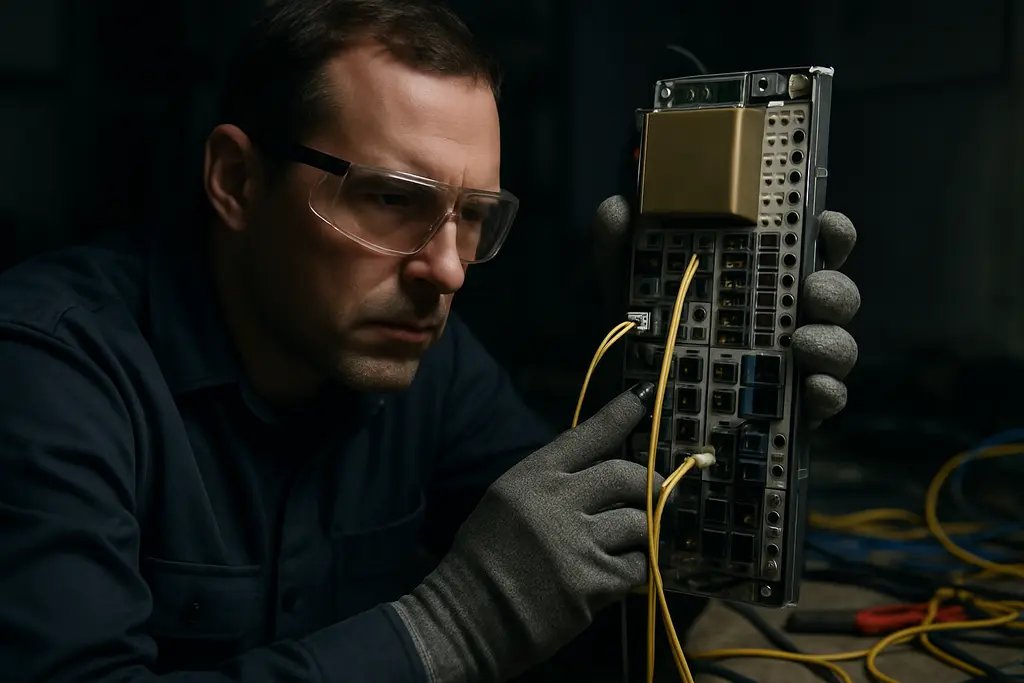
The order gave the Department of Energy authority to prohibit or condition transactions involving covered bulk-power system equipment and related services when risk criteria are met. The research record identifies equipment, software, firmware, remote access, and maintenance services as areas that may fall within transaction review. That is a meaningful shift because modern grid equipment is not only physical hardware; it often includes vendor-managed software, embedded control logic, update channels, and support relationships.
From a defensive standpoint, this makes the foreign equipment ban more than a supplier-origin screen. A device assembled outside the United States may be less concerning than a device with opaque firmware signing, uncontrolled remote access, or long-term support dependencies that an operator cannot audit. The useful security question is not only “who manufactured it,” but “who can influence it after installation.”
Foreign Equipment Ban Scope For Bulk Power Systems
The scope described in the research is limited to the bulk-power system: facilities and control systems associated with transmission rated at 69 kilovolts or more. Equipment used solely for local electricity distribution is excluded. That boundary matters because a broad reading could otherwise imply a full power-sector equipment freeze, which is not supported by the research notes.
The implementation details were not complete on September 3, 2026. The order required DOE to publish implementing regulations within 120 days after August 26, 2026. Those rules are expected to define covered foreign entities, identify risky equipment types, and set procurement and vendor qualification policies. Until those details are published, regulated parties face a gap between the policy signal and the operational checklist needed for contracts, inventory reviews, and project approvals.
Security Risks Behind The Foreign Equipment Ban
Remote Access And Maintenance Channels
The security rationale in the research centers on sabotage, remote access, and supply-chain disruption. Those risks are not theoretical categories in grid operations; they map to real control-plane concerns. Bulk-power equipment can include firmware that governs device behavior, interfaces into supervisory control and data acquisition environments, and service arrangements that allow vendors to diagnose or maintain deployed systems.
A defensive review should separate several risk types. First is the origin of core equipment. Second is the origin and integrity of software and firmware. Third is the identity and access model used for remote support. Fourth is the availability of replacement parts and qualified maintenance. The foreign equipment ban addresses these areas through authority over transactions and mitigation, but it does not by itself provide asset owners with a verified inventory or a tested replacement plan.
Installed Equipment Is Not A Static Asset
The research notes state that DOE may require existing installed equipment meeting risk criteria to be isolated, monitored, replaced, or removed. That matters because many security policies focus on new purchases while legacy equipment remains in service for long periods. A bulk-power asset can remain operational for years, and its risk profile can change if remote access patterns, firmware support, or supplier relationships change.
Isolation and monitoring sound less disruptive than removal, but they still require engineering judgment. Operators must understand network paths, control dependencies, failover behavior, telemetry requirements, and maintenance needs before isolating a device. Poorly planned segmentation can reduce an attack path but also impair visibility or slow incident response. Replacement can address the trust issue more directly, but only if a compatible, available, and qualified substitute exists.
Infrastructure And Cost Friction
Procurement Uncertainty For Utilities And Data Centers
The research identifies utility-scale inverters, battery energy storage systems, SCADA systems, and remote terminal units as product categories that may be affected by procurement or mitigation requirements. For utilities and developers, this creates contract uncertainty. A purchase order that looked acceptable before August 26, 2026 may need new review if the supplier, firmware, remote maintenance path, or covered entity definition changes under DOE rules.
Large data center owners are not the central target of the order, but they are affected by the same supply chain when interconnection projects depend on substations, inverters, storage systems, and control equipment. AI infrastructure expansion already depends on power availability; procurement restrictions can add another source of schedule risk if approved equipment is scarce or if project designs must change after vendor review.
Replacement Risk And Reliability
The research notes warn that replacing existing foreign-made equipment across the grid could impose high costs, stretch long supply chains, delay projects, and risk reliability if replacements are unavailable or late. The supplied materials do not provide a verified national dollar estimate for those changes, so a precise cost claim would be premature. The direction of risk, however, is clear: security-driven replacement is only useful if replacement capacity exists.
Grid equipment procurement can involve long lead times, specialized engineering, and compatibility testing. If many operators attempt similar replacements at once, the security policy could collide with equipment availability. That does not invalidate the foreign equipment ban, but it means implementation must be staged around risk, asset criticality, and operational impact rather than handled as a broad swap-out exercise.
- Highest priority: equipment with unmanaged remote access, unclear firmware provenance, or direct control-system impact.
- Moderate priority: assets that can be isolated and monitored while replacement planning proceeds.
- Lower immediate priority: equipment with limited control impact, documented support paths, and compensating monitoring already in place.
Supply Chain Visibility And Defense Lessons

GAO’s Findings Show The Visibility Problem
A July 2025 Government Accountability Office report on the defense industrial base found that the Department of Defense relied on more than 200,000 suppliers for weapons systems and non-combat goods, while still having limited visibility into which materials or components originated from foreign sources, according to GAO-25-107283.
That finding is not about the power grid directly, but it is relevant because it shows how hard origin tracing becomes in large supplier networks. A prime contractor or integrator may know the immediate vendor, yet still lack clear data about subcomponents, firmware dependencies, or materials several tiers down. For bulk-power systems, that same visibility gap can weaken procurement screening unless DOE rules and utility processes demand enough supplier disclosure to support risk decisions.
Component Origin Is A Security Control Input
Origin data should be treated as one input to a security decision, not as the whole decision. A useful review also needs firmware assurance, secure update practices, access logging, vendor support controls, incident notification terms, and a plan for end-of-life equipment. The order’s focus on covered entities can help structure that review, but asset owners still need technical evidence from suppliers.
The risk is that organizations reduce the issue to paperwork. A supplier attestation has value, but it does not replace configuration review, network monitoring, software inventory, or change-control records. Cybersecurity teams should push procurement and engineering groups toward evidence that can be checked: device inventories, firmware versions, support access records, maintenance contracts, and documented isolation options.
Foreign Equipment Ban Infrastructure Challenges
The foreign equipment ban gave DOE a policy tool for reducing foreign-linked risk in the bulk-power system, but the infrastructure challenge sits in implementation. The strongest near-term work is not dramatic removal. It is asset identification, supplier mapping, remote-access review, firmware and maintenance documentation, and risk ranking for equipment that may fall under DOE rules.
Utilities and large energy users should expect the 120-day regulatory process after August 26, 2026 to determine much of the practical burden. Definitions of covered foreign entities, affected equipment types, and vendor qualification policies will decide whether projects need modest documentation changes or larger design revisions. Until those rules are available, claims about exact costs, affected device counts, or project delays remain uncertain.
The security objective is legitimate: equipment that can be manipulated, remotely accessed without sufficient control, or stranded by supply-chain disruption can threaten reliability. The constraint is equally real: the grid cannot be secured by replacing equipment faster than qualified substitutes can be built, tested, delivered, and integrated. The measured path is to connect procurement controls with defensible technical evidence, then reserve removal for assets where monitoring and isolation cannot reduce risk enough.