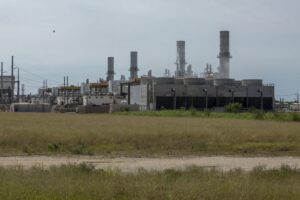
AI data center energy planning is no longer only a question of procuring enough electricity for a fixed compute campus. The research examples point to a more dynamic operating model: training and inference workloads may be shifted, cooling systems may be tuned with software, and sustainability claims increasingly depend on verifiable operating data rather than procurement language alone.
That change matters because AI facilities concentrate high-density servers, accelerators, networking, storage, and cooling into sites that can behave differently from conventional enterprise data centers. The clearest technical shift in the available evidence is not that every site has solved its power problem. It is that operators are testing whether compute demand, thermal management, and energy sourcing can be managed as one system.
AI Data Center Energy Demand Is Becoming Less Fixed
AI Data Center Energy Flexibility In Practice
A reported UK trial supported by Nvidia showed that AI data centers can adjust power use in near real time. According to the report, demand was reduced to 66% in under a minute and could fall as low as 10% capacity for longer periods, suggesting that certain AI workloads can be curtailed or shifted when the grid is under stress reported trial details.
The technical implication is significant but bounded. Flexible operation is easier to discuss than to deploy across production environments that have service-level objectives, customer commitments, checkpointing requirements, job scheduling limits, and accelerator utilization targets. Batch training jobs may tolerate some deferral. Latency-sensitive inference, financial workloads, or customer-facing services may have far less room to reduce load without affecting application performance.
This is why demand flexibility should be treated as an operational capability, not a simple energy-saving switch. It requires workload classification, scheduler integration, telemetry, contractual clarity with customers, and controls that prevent power reductions from causing cascading failures inside compute clusters. A related analysis of power-flexible AI data centers makes the same point: the grid value depends on whether compute operators can behave more like controllable loads without weakening reliability.
What Flexibility Does Not Prove
The trial evidence does not prove that every AI campus can cut power on command, nor does it establish a universal percentage reduction. Results are likely to depend on the workload mix, the degree of overprovisioning, cooling design, energy storage, customer contracts, and the operator’s tolerance for delayed work. The better reading is narrower: some AI loads appear to be technically adjustable fast enough to help grid operators during peak periods, if the data center has been designed and governed for that purpose.
Cooling Control Is Becoming An Energy Variable
Software Control And Thermal Risk
Cooling remains one of the most visible pressure points in AI infrastructure because dense accelerator clusters convert electrical input into heat that must be removed continuously. The research examples describe AI-assisted cooling optimization, including Schneider Electric deployments and Huawei’s iCooling@AI case at the Shanghai Stock Exchange’s Jin Qiao Data Center, where the reported annual electricity reduction exceeded 120 million kWh. Those are case-specific claims, so they should not be generalized without matching site conditions.
AI data center energy savings from cooling software depend on sensor quality, airflow design, rack density, water or liquid-cooling architecture, and the operator’s allowable thermal envelope. A control system can improve setpoints, detect inefficient operation, or coordinate equipment more effectively, but it cannot compensate for poor mechanical design indefinitely. Poorly tuned automation can also create operational risk if it masks hot spots, reacts too slowly to workload spikes, or relies on incomplete telemetry.
Immersion And Liquid Cooling Evidence
The research notes also cite Shell’s Houston data center using 864 immersion-cooled servers powered by dual 4th Gen AMD EPYC processors, with reported net-zero operational emissions and added high-performance computing capacity. Immersion cooling can reduce dependence on air movement and may support higher rack densities, but the operational case depends on fluid handling, maintenance procedures, hardware compatibility, warranty treatment, fire safety review, and staff training.
For operators, the decision is less about adopting a fashionable cooling method and more about matching heat removal to workload density. Direct liquid cooling, immersion, rear-door heat exchangers, and optimized air cooling each carry different maintenance and failure characteristics. The case studies suggest useful paths, but site-level engineering remains decisive.
Renewable Procurement Needs Operational Proof
Green Power And Time Matching
The Akamai and Iron Mountain case in the research set reports a data center operating on 100% certified green power since 2017, aligned with RE100 goals. That type of procurement is relevant, but it should be separated from real-time operational matching. Annual renewable certificates can support corporate accounting, while the physical grid may still supply power from mixed generation at any given hour.
For AI data center energy reporting, the next level of evidence is hourly or location-specific matching, grid emissions context, backup generation behavior, and clarity on whether renewable claims cover only electricity or also upstream and embodied impacts. Those distinctions matter because an AI facility can report renewable procurement while still creating local grid strain during peak periods.
Infrastructure Metrics Still Matter
The DataHub colocation example in Biel, Switzerland, reports a PUE below 1.25 through Schneider Electric’s EcoStruxure IT implementation. PUE is useful because it compares total facility energy to IT equipment energy, but it does not measure useful compute output, carbon intensity, water use, hardware lifecycle impact, or customer workload efficiency. A low PUE can coexist with high total electricity demand if the IT load is large.
That is why operators need multiple metrics: PUE for facility overhead, utilization for compute assets, carbon accounting for energy supply, and maintenance indicators for cooling and power systems. For teams presenting operating data to executives or customers, related network resources such as presentation templates can help structure briefings, but the underlying evidence must come from measured site data.
Research Partnerships Point To Unresolved Engineering Work

Academic And Industry Collaboration
Columbia University and IBM are partnering on research aimed at making powerful computing more sustainable, with attention on the energy demands of AI and data science research Columbia Engineering partnership. This kind of work is important because many of the hardest efficiency gains are not isolated to one device. They sit across chips, systems software, workload placement, cooling, and power delivery.
The research examples also mention digital-twin and Industrial IoT platforms for remote monitoring, sustainability tracking, and asset management. Those tools can improve visibility, but they do not guarantee better outcomes by themselves. Their value depends on data quality, model validation, integration with building management systems, and whether operators act on alerts before inefficiency becomes normal operating behavior.
Security And Control Boundaries
Greater automation also changes the security model. Cooling controls, power management systems, workload schedulers, and sustainability dashboards become part of the operational technology surface. Defensive priorities should include access control, network segmentation, logging, change management, vendor risk review, and fail-safe operating modes. The goal is not to expose new control paths in the name of efficiency without confirming that operators can safely override or isolate them during faults.
Sustainable AI Operations Depend On Measured Control
The case studies point toward a practical pattern: sustainable AI operations are most credible when energy flexibility, cooling optimization, renewable procurement, and monitoring are measured together. None of these strategies is sufficient alone. A site can buy renewable power and still waste energy through inefficient cooling. It can optimize cooling and still increase total demand through underutilized accelerators. It can reduce load briefly and still lack the controls needed for dependable grid response.
AI data center energy strategy should therefore start with workload mapping, facility telemetry, grid constraints, cooling limits, and verifiable emissions accounting. The most useful operators will be those that can explain not only how much power they use, but when they use it, what work it supports, how heat is removed, and which controls keep the system safe during stress events.
The evidence available today supports cautious optimism around flexible demand and smarter cooling, but it does not support broad claims that AI infrastructure has solved its sustainability challenge. The more defensible position is that operators now have a wider technical toolset, and the burden is shifting toward proof through measured, site-specific performance.