

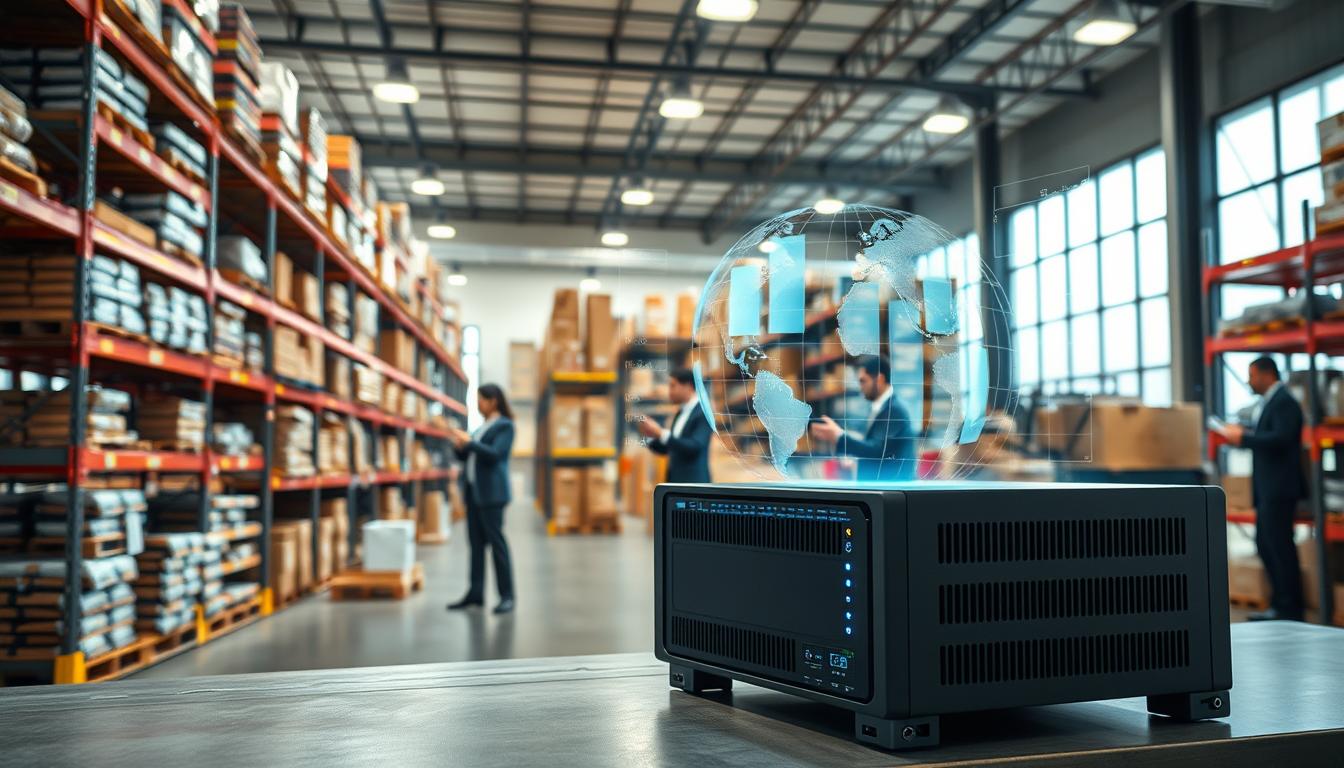
Remember when global logistics worked smoothly? Then COVID came, making the supply chain like a Rube Goldberg machine. It was fascinating but hard to predict.
Even though the pandemic is over, its effects still linger. We face port delays, labor shortages, and logistical problems every day.
Edge computing is here to help. It processes data locally, not sending it far away. This means real-time inventory tracking that’s faster than Amazon’s.
This isn’t just tech talk. It’s about predictive maintenance and fraud prevention. Companies like Whirlpool have seen huge returns, up to 63% in just two months.
The edge deployment revolution is not just coming. It’s already here, making logistics smooth and efficient.
Data Fusion Across Sites
Ever tried watching three sports games at once with someone narrating each play? That’s what old-school multi-site data management feels like. It’s like trying to listen to a bunch of loud noises without any rhythm. Data fusion changes this into a beautiful symphony where every part works together perfectly.
Our edge AI system is like a well-oiled machine with three main parts:
- Sensors act as digital eyes and ears
- Edge devices process information right where it happens
- Optimized AI models make sense of it all
We don’t dump all the raw data into central systems like digital hoarders. Instead, we send only the important summaries. It’s like getting the movie trailer instead of watching eight hours of behind-the-scenes footage.
The real magic is how we seamlessly integrate with your systems. Our API-driven approach connects with:
| System Type | Integration Method | Key Benefit |
|---|---|---|
| SCM Platforms | RESTful APIs | Real-time inventory updates |
| TMS Solutions | Middleware connectors | Unified logistics tracking |
| WMS Environments | Custom adapters | Enhanced stock visibility |
This isn’t about replacing your current setup. It’s about making your investments smarter. The result? True asset visibility IoT that actually works, not just looking good on a dashboard.
Imagine knowing exactly where every item is across all facilities without guessing. That’s the power of proper data fusion. It turns scattered information into something you can act on. As shown in recent industry analysis, this approach changes how companies get value from their operations.
The beauty is in its simplicity. Local processing means quicker decisions. Selective transmission means cleaner data. Smart integration means happier operations teams. It’s supply chain management finally catching up to the 21st century.
Asset Tracking Live
Asset tracking live is more than just knowing where things are. It’s about understanding everything about your supply chain all the time. It’s like having X-ray vision for your entire supply chain. No more guessing games or frantic searches. Just pure visibility.
The numbers show why real-time inventory tracking is so important. It’s a $18.8 billion market growing at 28% CAGR until 2028. That’s faster than most tech stocks during a bull market. This growth isn’t just for convenience. It’s for survival in today’s competitive world.
Cold chain monitoring takes it to another level. This sector is projected to grow from $42.59 billion to $119.74 billion by 2030. This growth is not just impressive. It’s revolutionary. It means vaccines stay effective, produce stays fresh, and pharmaceuticals remain potent. It’s the difference between profit and loss.

Predictive maintenance changes from reactive panic to proactive smoothness. The market here is staggering – jumping from $9.84 billion to $60.13 billion by 2030. Imagine getting alerts before equipment fails or temperatures fluctuate. It’s like having a crystal ball for your operations.
The real magic is in immediate anomaly detection. Temperature spikes? You know instantly. Route deviations? Alerted in real-time. Equipment vibrations suggesting future failure? Flagged before it becomes critical. This level of supply chain analytics turns guesswork into precision science.
Consider these transformative benefits:
- Real-time location intelligence – Know exactly where everything is, always
- Temperature monitoring – Critical for food, pharmaceuticals, and sensitive materials
- Predictive alerts – Get notified before problems occur
- Automated reporting – Data flows seamlessly into your analytics platforms
The beauty of modern supply chain analytics lies in its simplicity. Complex data becomes actionable insights. Potential problems become opportunities for optimization. What used to require teams of analysts now happens automatically, continuously, flawlessly.
This isn’t just about tracking assets. It’s about transforming how we think about logistics, inventory, and operations. The technology exists today to know more about your supply chain than ever before. The question isn’t whether you can afford to implement these solutions – it’s whether you can afford not to.
Security
Forget medieval castles and digital moats. Modern supply chain edge security works like Ethan Hunt from Mission Impossible. It’s decentralized, intelligent, and always ahead of threats. It’s not about building higher walls but creating smarter sentinels.
Think of edge security as that hyper-vigilant friend who spots expired milk in your fridge before you even smell it. The system combines:
- Hardware fortification that would make Fort Knox jealous
- Military-grade encryption that even cryptographers admire
- Certificate-based authentication that’s stricter than a nightclub bouncer
- Centralized management platforms watching over everything like hawk-eyed elementary teachers

The real genius? Distributed intelligence. Unlike traditional systems, edge computing creates neighborhood watch programs at every node. When a scanner detects suspicious activity, it doesn’t wait for headquarters’ permission to sound alarms.
This instant response capability tackles both external threats and internal errors. Sometimes, the weakest link isn’t a hacker but the employee still using “password123.”
The beauty of this approach lies in its layered defense strategy. Each component acts as both independent guardian and collaborative sentinel. As industry experts note, this creates resilience that traditional centralized systems simply can’t match.
Human error meets its match with instant alert systems. Imagine every potential mistake having its own personal alarm bell. Wrong shipment quantity? Instant flag. Unauthorized access attempt? Immediate lockdown. It’s like having a digital Jiminy Cricket on every device.
The supply chain edge doesn’t just move faster – it thinks smarter about protection. This isn’t security through obscurity but security through ubiquitous vigilance. Because in today’s connected world, the best defense isn’t a bigger wall but brighter watchtowers at every corner.
Deployment Stories
Every tech revolution needs its heroes. Meet Whirlpool, the appliance giant that went from hiding in warehouses to seeing everything clearly. Their story with Industrial Service Technology and Zebra Technologies is like a love story for supply chains.
They used XT15 mobile computers, VH-10 systems, and solutions that would impress even Sherlock Holmes. The outcome? A 63% ROI in just over two months. That’s the kind of success that makes accountants smile.
This isn’t just about future dreams – it’s real, profitable change. Companies now predict problems instead of just reacting. The right AI solutions make this magic happen.
Whirlpool got better battery tracking, device use monitoring, and instant problem solving. Their approach turned guesses into facts. These stories show that tech is more than gadgets – it’s about changing how we work.
From bad to great, these companies show what’s possible. They’ve moved from being reactive to being proactive. The key? Stop hiding from your supply chain and start seeing everything. That’s how you turn chaos into a competitive edge.



