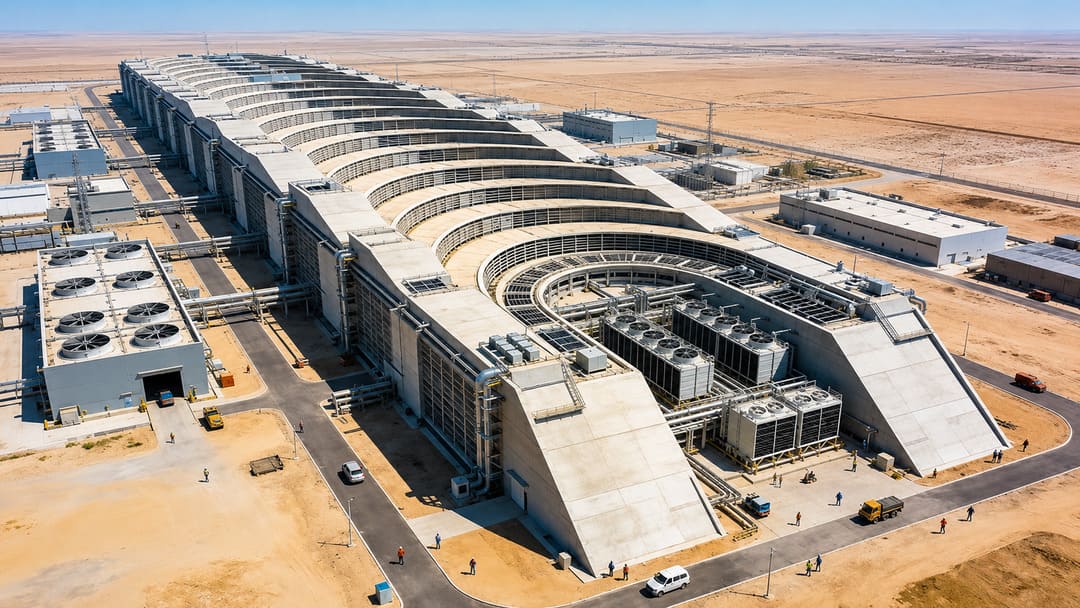
The China AI infrastructure buildout is no longer just about catching up in model performance. A proposed five-year, roughly 2 trillion yuan data-center push would make compute capacity part of China’s national industrial strategy, with power, chips, telecom networks, and state planning all tied into one larger sovereignty play.
That matters because AI leadership is moving away from software alone and into the physical systems that make large-scale intelligence possible. The same strain visible in the global data center surge is now becoming a geopolitical contest over who controls the servers, chips, energy routes, and network fabric beneath the AI economy.
China AI Infrastructure Buildout Is About Sovereignty
The reported plan is not simply a construction program for more server halls. It is a bid to reduce dependence on foreign technology while building a nationwide foundation for AI adoption across the economy.
That is the sovereignty angle. A country that cannot control its compute layer has to rely on outside suppliers for the infrastructure behind advanced models, industrial automation, surveillance systems, cloud services, and scientific research. For China, that dependency is no longer acceptable in a world shaped by export controls, chip restrictions, and U.S.-China technology rivalry.
The latest nationwide AI buildout details point to a state-guided effort to build interconnected data centers across the country, with state-owned firms expected to carry much of the operating burden.
This is where AI becomes industrial policy. Compute is national leverage, not just an engineering resource.
State Telecom Firms Could Become the Backbone
China Mobile and China Telecom are expected to play major roles in operating much of the data-center network. That choice makes strategic sense.
Telecom operators already sit close to national connectivity, backbone networks, enterprise customers, cloud infrastructure, and government priorities. If China wants a connected AI compute grid rather than scattered private facilities, state telecom firms are natural instruments.
The model also gives Beijing more influence over where compute is built, how it is connected, which suppliers are used, and how capacity supports national priorities. That is different from a purely market-led data-center boom where cloud providers choose locations based mainly on land, tax incentives, power prices, and customer demand.
A state-directed network can pursue resilience and self-reliance even when the economics are complicated. The tradeoff is efficiency. Central planning can mobilize capital quickly, but it can also create overbuilding, uneven utilization, or politically driven site choices.
That risk does not make the strategy weak. It makes the next phase harder to judge from the outside.
Huawei’s Role Shows the Chip Fight Is Not Separate
The buildout becomes more important because it is expected to rely heavily on domestic suppliers, including Huawei Technologies for a large share of AI-related technology such as chips.
That detail matters because data centers are not neutral containers. Their architecture reflects the hardware supply chain available to them. If China’s new AI campuses are built around domestic chips, networking equipment, and software stacks, the country is not just adding capacity. It is trying to create an alternative infrastructure ecosystem.
The pressure point is performance. U.S. export controls have limited China’s access to the most advanced Nvidia hardware. Domestic alternatives can reduce dependency, but the question is whether they can deliver enough performance, efficiency, and scale for the workloads China wants.
This is where chips shape strategy. If domestic hardware improves quickly, China gains more room to maneuver. If the gap remains wide, the buildout may produce capacity that is large but less competitive for frontier training.
The Buildout Raises a Different Kind of Data-Center Risk
Most data-center debates focus on local power, water, land, and community concerns. Those issues still matter in China, especially at the scale implied by a nationwide program. But this project adds another layer: systemic concentration.
A national AI data-center network tied to state-owned operators and domestic suppliers could create stronger coordination, but also tighter dependencies. If one generation of chips, networking systems, or software architecture becomes dominant across state-backed facilities, weaknesses could spread widely.
| Pressure Point | What China Gains | What Could Become Risky |
|---|---|---|
| State-led planning | Faster coordination across regions | Political priorities may override efficiency |
| Telecom operation | Strong network integration | More centralized infrastructure dependency |
| Domestic chips | Less exposure to foreign restrictions | Performance and supply gaps may matter |
| Interconnected hubs | Better national compute distribution | Shared architecture can spread weaknesses |
| Massive investment | Long-term AI capacity expansion | Overbuilding or underused capacity is possible |
The table shows why scale alone is not the full story. Infrastructure quality, utilization, resilience, and supply-chain depth will decide whether the spending turns into durable advantage.
Washington Will Read This as an Infrastructure Signal
The United States already treats AI hardware as a strategic sector. China’s reported plan reinforces that view.
A $295 billion buildout would not be read in Washington as a normal technology investment. It would be seen as a state-backed attempt to close the compute gap, reduce dependence on Western chips, and make AI capacity available across government and industry.
That matters for export policy. If China can build large AI systems with domestic suppliers, U.S. restrictions may lose some force over time. If China still struggles to match advanced U.S.-aligned hardware, Washington may view compute controls as effective.
The official role of China’s National Development and Reform Commission also matters because it shows how closely AI infrastructure is tied to national economic planning. This is not just a competition between labs. It is a competition between systems for building the physical base of AI.
For companies outside China, the message is clear: infrastructure decides power. The future AI race will be measured in chips, energy contracts, fiber routes, sovereign cloud capacity, and government-backed capital.
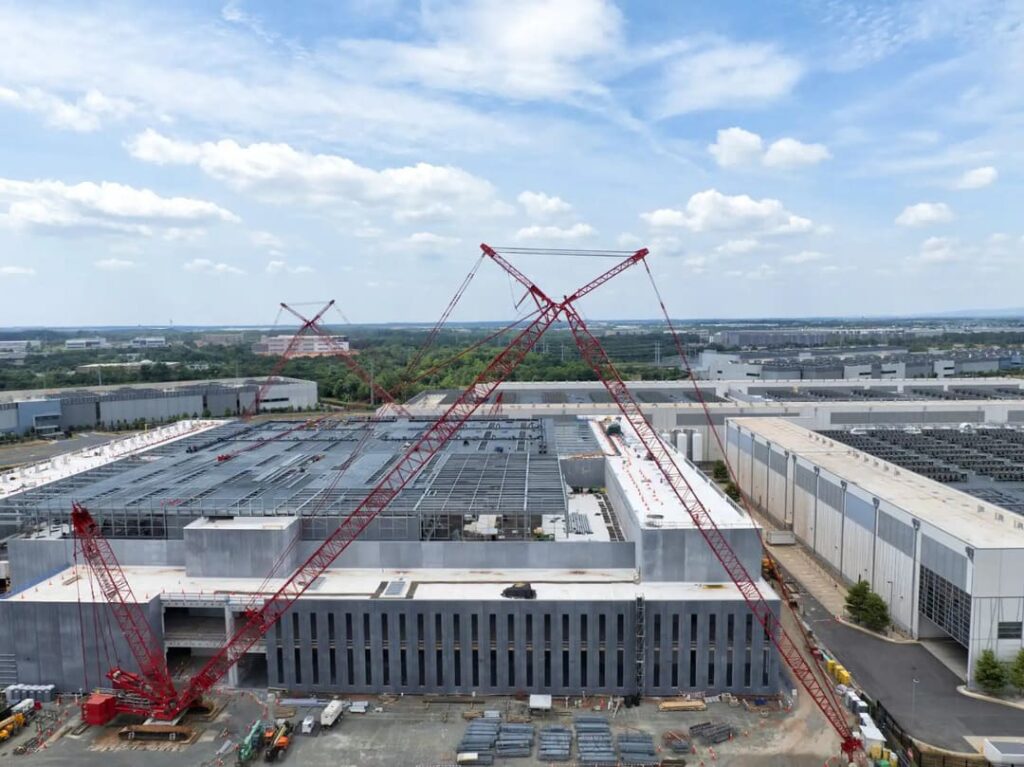
The Next Test Is Utilization, Not Spending
The headline number is large, but spending alone will not prove success. The real test is whether the buildout creates useful, efficient, secure, and competitive AI capacity.
The first signal will be hardware performance. Domestic chips must support serious workloads at acceptable cost and energy levels. The second signal will be utilization. Empty or underused data centers would weaken the case for state-directed expansion.
The third signal will be regional placement. Data centers need power, cooling, connectivity, and skilled operators. Poor siting can turn big infrastructure into a long-term drag.
The fourth signal will be whether Chinese AI companies, universities, manufacturers, and government agencies can actually access and use the new capacity productively. Compute only matters when it turns into models, tools, industrial systems, and national capability.
The China AI infrastructure buildout matters because it frames AI as a contest over physical capacity, not just software talent. If Beijing can turn state capital, telecom networks, domestic chips, and national planning into a functioning compute grid, the AI race becomes less about who has the best single model and more about who can industrialize intelligence at national scale.