


Imagine working where internet is as reliable as dial-up. Welcome to offshore drilling, the digital Wild West. Every minute of downtime feels like watching your retirement fund disappear.
Deep-water operations cost $600-800k daily. That’s more than a Hollywood divorce. When equipment fails, the financial loss is terrifying.
Traditional methods wait for signals that might never come. It’s like running a Fortune 500 with carrier pigeons.
But what if these remote challenges could become efficiency hubs? Modern solutions are changing field operations. They turn digital Siberia into mission control.
We’re talking about giving remote sites their own brain. They can make smart decisions without waiting for approval that’s too late.
The economics need this change. Predictive maintenance can save millions. It’s the difference between profit and disaster.
Real-Time Data Processing
The days of waiting for critical operational data are as extinct as Blockbuster Video. Today’s oil fields generate information faster than a TikTok trend goes viral. This creates a tsunami of data that traditional systems can’t handle.
Edge computing solves this like a Vegas card counter processing probabilities. It analyzes data right at the source. This approach handles massive volumes while overcoming the limited bandwidth that plagues remote rig sites.
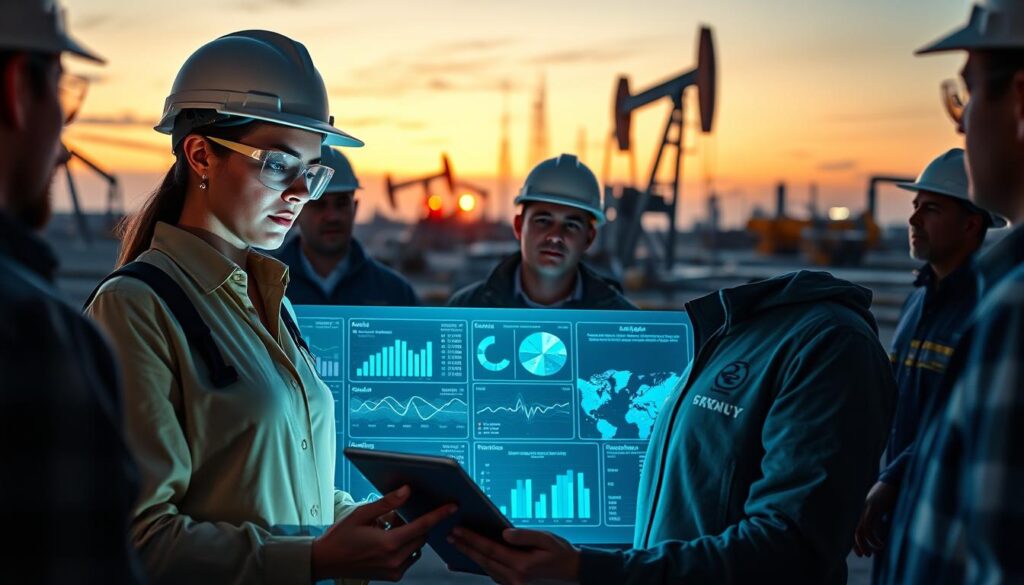
The beauty of this oil and gas edge computing approach? Near-zero latency. While cloud systems might still be buffering, edge devices are already detecting equipment stress levels, torque trends, and potential failures. It’s the difference between preventing a catastrophe and writing the incident report.
Automated Alerts
Traditional field alert systems were about as useful as a screen door on a submarine. Modern automated edge alerts? They’re like having a psychic mechanic on payroll 24/7.
These intelligent systems detect everything from illegal dumping at tank batteries to equipment failures before they happen. Schlumberger’s Google Glass pilot makes field workers look like sci-fi extras while actually improving safety. Shell’s mobility tools boosted efficiency by 20% – which in oil terms is like finding an extra barrel in every five.
The real magic happens in the analytics for energy sector that power these systems. They understand context, prioritize threats, and deliver precision information. Best of all? They work even when connectivity doesn’t – because in the middle of nowhere, your last hope shouldn’t be a satellite signal hiding behind clouds.
This transformation is part of the broader IIoT revolution in oil and gas that’s changing how we think about field operations. The future isn’t coming – it’s already here, processing data at the edge and keeping operations running smoother than a Texas oil baron’s sales pitch.
Improving Decision Cycles
Boardroom talks over coffee have turned into quick decisions with oil and gas edge computing. This change is huge, like the impact of directional drilling. It’s a big leap forward.
Predictive maintenance is now super accurate. I’ve seen systems predict compressor failures weeks ahead. This turns big problems into planned fixes. The savings are huge, much more than OPEC’s cuts.
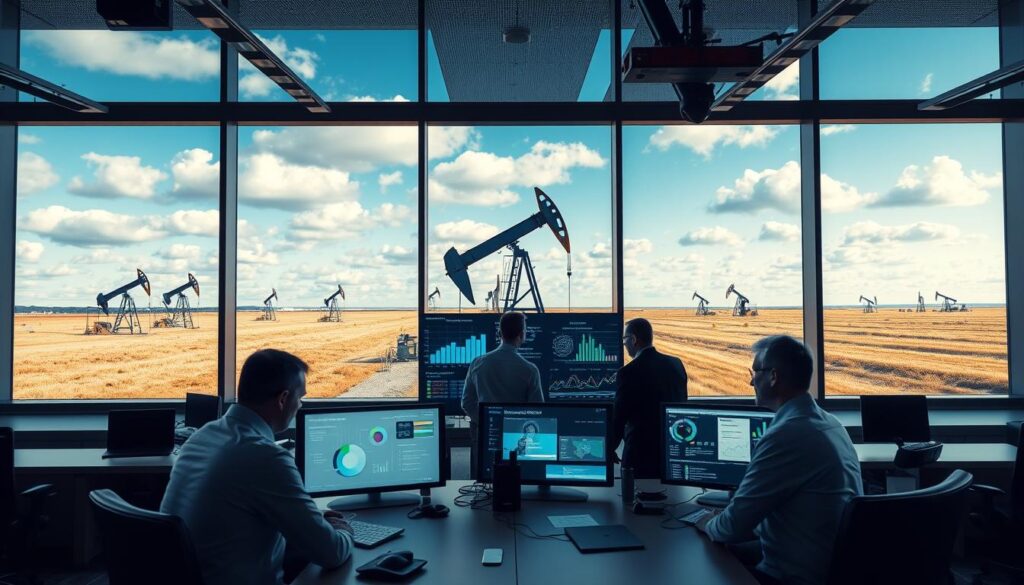
Drill path monitoring has changed from after-action reviews to live coaching. It compares planned and actual paths in real time. This creates fast feedback loops, even better than NASA’s.
Anti-collision tech is like a movie star. It shows distances to threats and sets safe zones. It’s like giving drillers X-ray vision and a danger sense.
These systems make quick and better decisions. Machine learning uses lots of data to improve predictions. It’s like having experienced drillers who never sleep.
Now, decisions that took days happen in milliseconds. Guesswork is replaced by data-driven certainty. It’s smarter, not just faster, thanks to tech that learns from all experiences.
ROI Stories
The numbers don’t lie – they just make accountants cry happy tears. When we talk about analytics for energy sector applications, the return on investment is impressive. It’s like a Wall Street success story that even Gordon Gekko would admire.
Predictive maintenance isn’t just a buzzword; it’s a financial revolution. Companies are seeing big reductions in unplanned downtime. The savings are huge, like finding more money than you’d find in a couch cushion.
Drone technology has turned pipeline monitoring into something from a sci-fi novel. These flying inspectors don’t just identify problems – they create immediate work orders before returning to base. It’s like having a team of superhero engineers who never sleep or demand overtime.
One client’s story particularly stands out. Using edge-based object detection, they reduced illegal dumping incidents by 90%. The avoided fines would make a parking ticket look like pocket change. Environmental damage prevention became their unexpected profit center.
The real magic happens when you combine these technologies into comprehensive oil and gas analytics solutions. Equipment lasts longer than a Kardashian marriage, injuries decrease dramatically, and compliance costs plummet faster than a reality TV star’s career.
These aren’t theoretical benefits. They’re quantifiable returns that make analytics for energy sector investments smarter than drilling in Texas instead of farming it. The data speaks for itself – and it’s saying “cha-ching” in every language that matters.
Cost savings from predictive maintenance alone often pay for the entire system within months. Then the real fun begins – watching those savings compound quarter after quarter while risks diminish and efficiency soars.
This level of analytics for energy sector performance isn’t just good business. It’s what happens when technology meets opportunity and they decide to go into business together. The ROI stories aren’t just impressive – they’re rewriting the rules of energy operations.
Deployment Best Practices
Deploying oil and gas edge computing needs careful planning. These systems must grow with different operations and stay sustainable. Think of combining renewable energy with military precision.
Your technology should work well from offshore rigs to remote fields. It should adapt to changing conditions like a seasoned diplomat.
Redundancy is key in oil and gas edge computing. It’s your protection against losing important data. Think of fail-safes that NASA would be proud of.
Security must be as strong as Fort Knox. Use two-factor authentication and encrypted communications. Industrial espionage is serious business.
Companies like Barbara, recognized by Gartner, show how to do it right. They combine industrial connectivity with machine learning. This creates systems that can troubleshoot themselves better than most IT teams.
The goal is technology that works in extreme conditions. It should survive Arctic cold and desert heat while giving real-time insights.
The best deployments mix strong security with easy-to-use interfaces. When your equipment faces extreme conditions, you need solutions that are simple yet smart. That’s how modern oil and gas edge computing turns tough environments into data-rich decision centers.



