Cerebras IPO analysis matters right now because Wall Street is being forced to answer a harder question than whether Nvidia still dominates AI hardware. The more interesting question is whether public investors are willing to pay a premium for an alternative built around unusual wafer-scale architecture and a market hungry for AI infrastructure.
Why Cerebras IPO Analysis Matters Now
The Cerebras offering is not just another semiconductor listing arriving during an AI rally. It is a test of whether investors believe the AI hardware market has room for companies that do not look like Nvidia, do not sell conventional GPU systems, and do not need to win every workload to become strategically important. That is the real signal inside the IPO buzz.
As of May 11, the company’s marketed range had reached $150 to $160 per share, with 30 million shares expected to be offered, creating a path to raise as much as $4.8 billion before any underwriter option. Those numbers matter because they show appetite and demand for AI chip exposure even after an enormous run across the broader semiconductor trade.
For investors tracking Cerebras IPO analysis, the appeal is easy to understand. The public market has been looking for investable ways to participate in AI compute beyond the obvious mega-cap names. Cerebras offers a cleaner, riskier, more concentrated version of that story: a company with a distinct technical identity and a valuation that already assumes significant execution.
This IPO is not simply about whether a chip company can go public. It is about whether the market is ready to assign premium value to scarcity. In AI hardware, scarcity is no longer only about chips. It is about compute capacity, power access, memory, networking, software support, and deployment speed. Cerebras is trying to position itself inside that larger ecosystem.
The AI Chip Market Wants A Credible Alternative
Nvidia remains the reference point for AI hardware, and pretending otherwise would distort the market. Its GPUs, software stack, developer ecosystem, networking assets, and data center relationships have made it the default platform for much of the AI boom. But markets rarely stop searching for alternatives when one company becomes too important. Concentration creates risk as well as value.
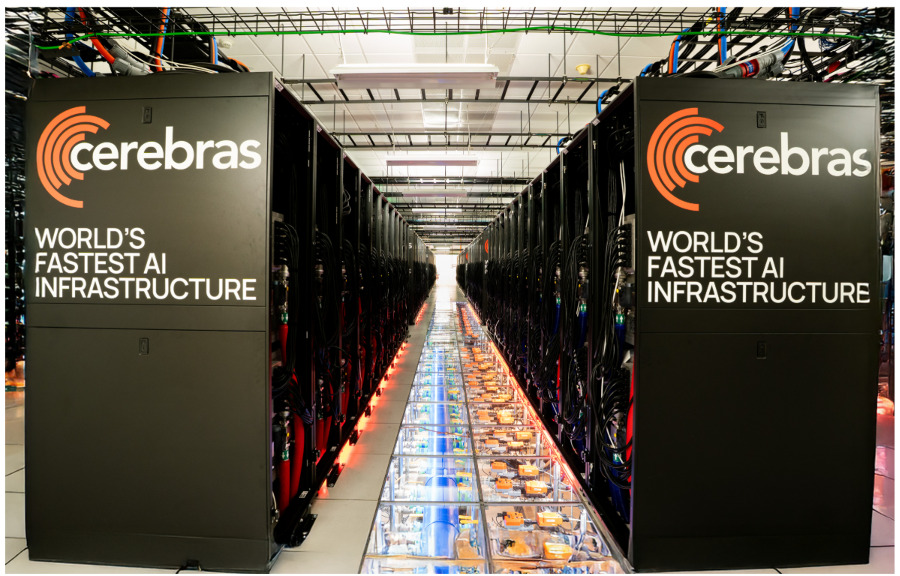
That is the opening for Cerebras. The company is not pitching itself as another commodity accelerator vendor. It is pitching a different computing architecture, built around wafer-scale chips that put an unusual amount of compute and memory close together. The thesis is that this approach can reduce bottlenecks that slow large AI workloads. That is the architecture investors are being asked to price.
AI demand has changed. Early excitement centered heavily on model training: the expensive work of building frontier models. The next phase is increasingly about inference: running models repeatedly, cheaply, quickly, and reliably for real users. If AI products become everyday tools, inference demand can become vast. That creates space for new hardware strategies and new competition.
But space does not guarantee success. AI buyers care about performance, software compatibility, reliability, uptime, total cost, vendor support, and long-term road maps. A novel chip can win attention, but customers need infrastructure that works under pressure. That is where Cerebras must prove that technical differentiation can become operational confidence.
What Makes Cerebras Different
Cerebras is known for its wafer-scale approach. Instead of cutting many chips from a wafer and packaging them separately, the company builds a processor that uses an entire wafer. Its Wafer Scale Engine design is the center of the company’s identity and the reason investors treat it as one of the more unusual AI hardware names. The result is a story built around scale, not incremental chip design.
The basic appeal is straightforward. Moving data around is one of the biggest constraints in AI computing. If a system can keep more compute and memory close together, it may reduce delays and improve throughput for workloads suited to that architecture. The promise is better throughput where the workload fits.
The latest Cerebras IPO filing gives investors a direct look at the public-market version of that thesis, including the company’s business model, customer concentration, risks, and financial profile. The filing is more than legal paperwork; it is a reminder that excitement and exposure are not the same thing as durability.
| Issue | Why It Matters For Investors | What To Watch |
|---|---|---|
| Wafer-scale architecture | Differentiates Cerebras from standard GPU systems | Whether customers see sustained performance advantages |
| IPO valuation | Demand is strong, but expectations are high | Final pricing and first weeks of trading |
| Customer concentration | Large commitments can accelerate revenue but raise dependency concerns | Revenue diversity after the debut |
| AI inference demand | The market is shifting toward real-time AI usage | Adoption beyond early headline customers |
| Nvidia dominance | Alternatives are attractive, but the leader remains formidable | Software ecosystem and deployment friction |
| Capital intensity | AI hardware requires heavy investment | Margin profile, cash needs, and infrastructure costs |
The table captures why the IPO is both compelling and uncomfortable. Cerebras has a differentiated story, but the market is being asked to price a lot of future success upfront. That combination can create momentum quickly, but it can also magnify disappointment if growth, margins, or customer expansion fall short.
The IPO Is Really A Scarcity Trade
The reason Cerebras can generate this kind of attention is not difficult to decode. Public investors have limited pure-play AI hardware options. Nvidia is already enormous. AMD is diversified. Broadcom, Marvell, and other chip names have AI exposure but are not clean one-idea bets. Cerebras offers something closer to a concentrated AI compute narrative. That scarcity gives the deal unusual visibility.
Scarcity has power. When investors want exposure to a theme and few public companies offer it cleanly, valuations can stretch. The challenge is that scarcity can support a premium only until performance has to justify it. That is the discipline public markets eventually impose.
A hot IPO can make a company look validated before the operating model has been tested in public. The real test comes after the debut, when quarterly reporting replaces narrative control and investors start measuring backlog conversion, revenue quality, customer diversity, and operating leverage. That is when proof starts replacing promotion.
Customer Commitments Cut Both Ways
Large customer relationships can transform an AI hardware company. They can validate technology, accelerate revenue, attract partners, and reassure investors that the product is not merely experimental. But customer concentration can also become a source of fragility.
If a small number of buyers account for a large share of demand, investors need to ask what happens if timing changes, deployments slow, contracts shift, or customers diversify their suppliers. A company can be strategically important and still financially exposed if too much revenue depends on too few relationships. That is a dependency question, not a footnote.
This is one reason the Cerebras story should not be reduced to “Nvidia challenger.” That phrase is useful for headlines, but it can be analytically lazy. The better question is whether Cerebras can become a durable AI infrastructure supplier with enough customer breadth to survive cycles, delays, and pricing pressure. Customer diversity will matter as much as speed.
The same point applies to other non-Nvidia AI chip efforts globally. The rise of alternative AI chip strategies shows that the market is not only looking for faster hardware; it is looking for supply-chain flexibility, geopolitical resilience, and more control over the compute layer. Cerebras fits into that broader context even though its business story is distinct.
Why Wafer-Scale Hardware Is A Market Story
The technical details matter because they shape the business model. A wafer-scale chip influences system design, cooling, packaging, serviceability, software optimization, and customer adoption. That creates both advantage and complexity.
The upside is clear. If Cerebras can deliver strong performance for important workloads, it may win demand from buyers who need alternatives to GPU clusters or who want faster inference for specific applications. In a market where every major AI company is fighting for compute, even a narrow advantage can be commercially meaningful. That is where specialization becomes more than a slogan.
The downside is equally clear. Unusual architectures can face adoption friction. Customers may need to change workflows, trust new tooling, or accept a different deployment model. Buyers do not simply purchase theoretical performance; they purchase reliability, staffing comfort, software maturity, and procurement certainty. Those softer factors often decide enterprise adoption and long-term reliability.
That is why this IPO is as much about go-to-market credibility as chip design. The market will not only ask whether the technology works. It will ask whether customers can use it easily, repeatably, and at scale. That is the difference between innovation and commercialization.
The Inference Shift Gives Cerebras A Timely Narrative
AI infrastructure spending is moving into a new phase. Training frontier models remains expensive and strategically important, but inference is where AI becomes a daily operating cost. Every customer query, code suggestion, image request, agent action, enterprise workflow, and search-like answer creates inference demand. That gives the market a fresh catalyst.
That makes low-latency, high-throughput AI infrastructure more valuable. If Cerebras can position its systems as useful for inference-heavy workloads, the timing of the IPO becomes more attractive. Public investors are no longer buying only the dream of bigger models. They are buying the idea that AI usage will keep expanding across products and enterprises. The key is adoption, not curiosity.
The question is whether that usage becomes profitable enough to support the infrastructure buildout. AI companies and cloud platforms are spending heavily, but the economics of AI services remain under scrutiny. Hardware suppliers can benefit from that spending wave, but they are not immune to customer cost pressure. If AI buyers begin demanding cheaper inference, every hardware vendor will face pricing tension.
This is where Cerebras’ differentiated architecture could become either a weapon or a vulnerability. If it delivers better economics for targeted workloads, it gains relevance. If buyers prefer flexible, standardized systems that fit existing stacks, Cerebras may need to work harder to prove the case. Product-market fit will decide the outcome.
The Valuation Debate Is The Real Story
A strong IPO order book does not automatically mean a stock is cheap. It means demand exists at the marketed price. Those are different claims, and serious investors should keep them separate. The higher the offering price moves, the more future performance is being pulled into the present. That creates valuation pressure before trading even begins.
That does not make the IPO irrational. AI hardware is one of the few markets with credible long-term growth, urgent customer demand, and strategic scarcity. Companies that control meaningful compute platforms can become extremely valuable. But a great theme can still produce a difficult stock if the entry price is too aggressive. That is the valuation tension.
Investors should ask three practical questions. How much future revenue is already visible through contracts and commitments? How much of that revenue can become high-quality, repeatable, and diversified? How much operating leverage can the company show as it scales? Those questions define quality.
Those questions matter more than the first-day pop. IPO excitement can create a dramatic debut, but sustainable public-market performance depends on the company’s ability to convert promise into results. The difference between a great product story and a great public company often comes down to execution.
Nvidia’s Dominance Is Still The Backdrop
Every AI chip IPO lives in Nvidia’s shadow. That shadow is not just about hardware performance. Nvidia’s real moat includes software, networking, ecosystem depth, developer familiarity, customer relationships, and a deep roadmap. Competing against that is difficult because the switching cost is not purely financial. The moat is also software.
Still, public investors can be impatient. If a company is marketed as an Nvidia alternative, the comparison can become unforgiving. Any delay, margin pressure, or customer concentration issue may be judged against Nvidia’s scale and profitability rather than against the normal path of a younger hardware company. That creates expectation risk.
What Retail Investors Should Think About Next
Retail investors should resist the temptation to treat every AI IPO as a guaranteed winner. Hot themes can produce big gains, but they can also create painful reversals when expectations outrun fundamentals. Cerebras has a compelling story, but that does not eliminate valuation, liquidity risk. That demands caution.
A careful investor should watch final pricing, early trading volume, first earnings guidance, customer disclosures, backlog conversion, and gross margin behavior. The first day may be exciting, but the first year will tell a more important story. A company that can grow into its valuation deserves respect. A company that needs perfect execution to justify its price deserves patience.
The best lens is probability, not hype versus skepticism. Cerebras may become a meaningful AI infrastructure company, but it may also face the classic challenges of hardware scaling: manufacturing complexity, customer timing, capital needs, service demands, and competitive pressure. The right view holds both possibilities without pretending the outcome is obvious. That requires judgment.
The Bigger Meaning Of Cerebras IPO Analysis
The Cerebras IPO is useful because it reveals where the AI hardware debate is heading. Investors are no longer satisfied with broad claims about AI demand. They want to know which companies can turn demand into durable revenue, which architectures can survive real deployment, and which suppliers can matter in a world still dominated by Nvidia. That is the next phase of the chip story.
That makes Cerebras more than a ticker to watch. It is a referendum on whether specialized AI hardware can earn public-market trust at scale. The company’s wafer-scale approach gives it a distinctive identity, but identity alone will not carry the stock after the opening excitement fades. Public investors will want evidence and growth.
Cerebras IPO analysis matters because the market is searching for the next investable layer of AI infrastructure. The opportunity is real: AI workloads are expanding, inference demand is rising, and customers want more choices. The risk is just as real: valuation can move faster than fundamentals, and hardware companies must prove themselves through delivery, not narrative. If Cerebras can turn scarcity into sustained performance, its debut could mark a serious moment for AI chip alternatives; if not, it will become a reminder that even the hottest AI stories still have to earn their premium.