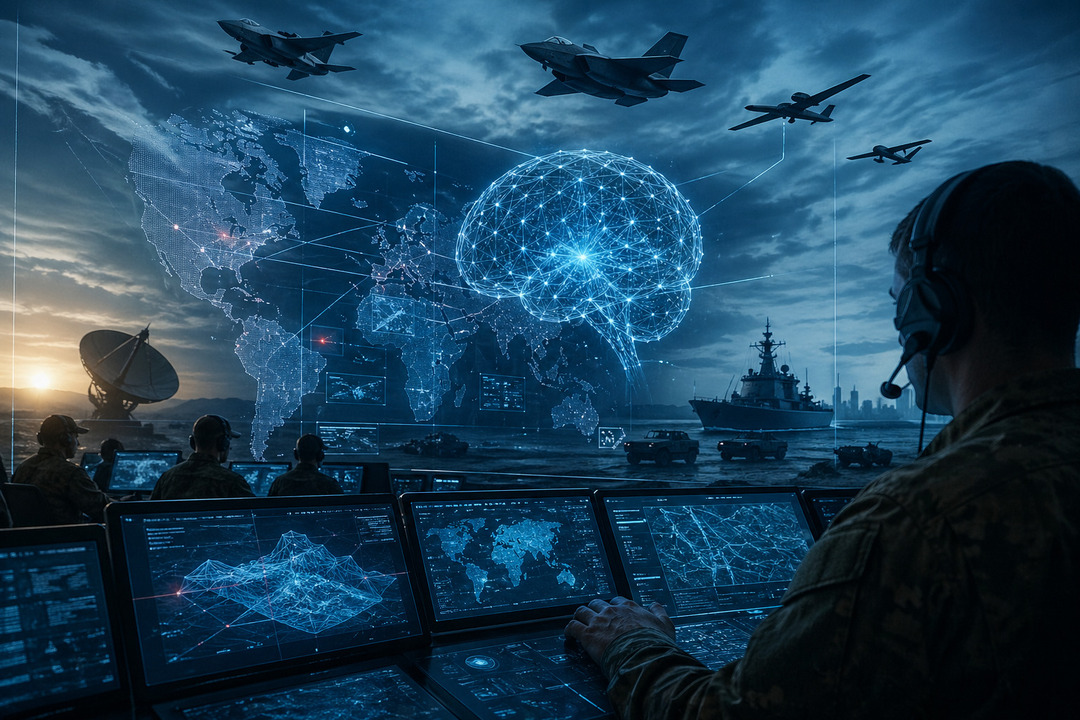
The boundary between Silicon Valley and the battlefield is no longer theoretical. With Big Tech moving deeper into classified defense work, AI is crossing from consumer products and workplace tools into the command structures of national security.
AI Military Defense Contracts Are Redefining Big Tech
For years, artificial intelligence was sold to the public as a productivity revolution: faster search, smarter assistants, automated coding, better customer support. That framing now feels incomplete. The more consequential story is that AI is becoming part of defense infrastructure, and the companies building the world’s most powerful models are increasingly being asked to serve military needs.
Google’s reported classified agreement with the U.S. Pentagon marks a symbolic break point. The issue is not merely that a major technology company may provide AI models to the government. Tech companies have long supplied cloud, cybersecurity, mapping, and data infrastructure to public agencies. The sharper question is whether frontier AI systems should be integrated into military workflows that may involve mission planning, intelligence analysis, operational decision-making, and weapons-related support.
That is why AI military defense contracts have become one of the most important technology stories of the moment. They are not just procurement arrangements. They are governance tests.
Why This Deal Feels Different
The controversy around Google’s reported Pentagon deal is rooted in history. In 2018, employee protests over Project Maven pushed Google to step away from a defense initiative involving AI-assisted analysis of drone footage. That episode became a defining moment in tech labor activism. It also established a clear expectation inside parts of the company: advanced AI should not be casually folded into military operations.
The new moment is different because the technology itself is different. Earlier AI systems were narrower, often optimized for classification, detection, or pattern recognition. Today’s frontier models can summarize intelligence, generate plans, write code, interpret documents, process imagery, and assist with complex reasoning tasks. Their flexibility is precisely what makes them valuable and what makes their military use harder to constrain.
A contract that permits AI use for broad government purposes raises questions that cannot be answered with a simple policy statement. What counts as mission support? Where does planning end and targeting begin? How much human oversight is meaningful when AI systems compress analysis that once required many layers of review? These are not abstract ethics seminar questions. They are operational questions with real-world consequences.
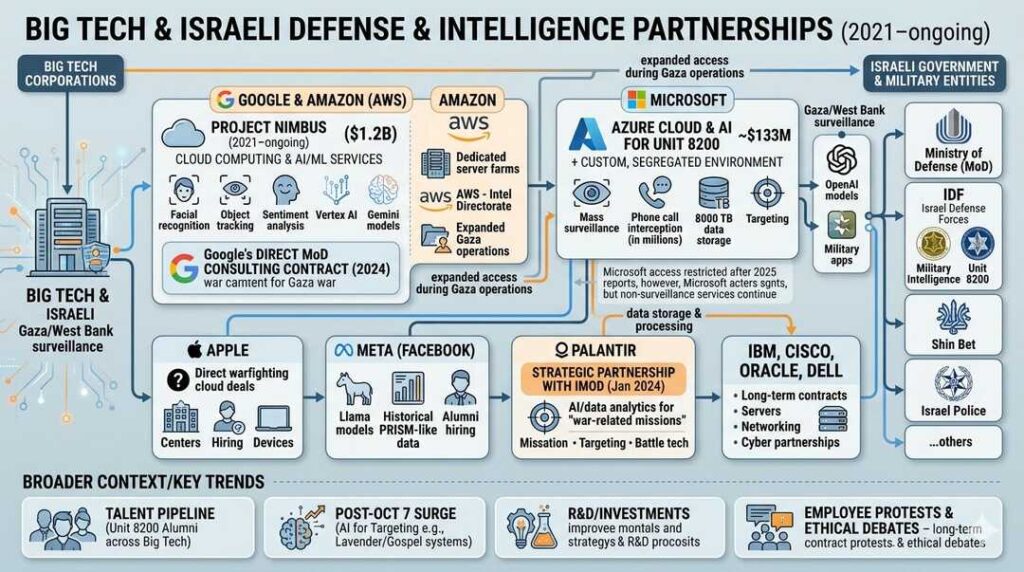
The Safeguards Problem
Supporters of defense AI argue that military adoption is inevitable and, if handled responsibly, beneficial. AI can improve logistics, detect cyber threats, accelerate document review, reduce administrative burdens, and help commanders process information in time-sensitive environments. In principle, it may even reduce human error.
But safeguards matter most when systems are used in environments where accountability is hardest to inspect. Classified work, by design, limits public visibility. That creates a governance paradox: the more sensitive the application, the less ordinary citizens, employees, watchdogs, and even some policymakers can know about how the technology is being used.
Public assurances against domestic mass surveillance or fully autonomous weapons without human oversight are important. Yet they are not the same as enforceable transparency. If a company does not retain meaningful veto power over downstream government use, the practical limit may depend less on corporate principles than on agency interpretation, internal military procedures, and legal definitions that may not keep pace with technical capability.
The central concern is not whether AI can support national security. It is whether democratic oversight can keep up once AI enters classified military systems.
Employee Backlash Signals A Deeper Governance Crisis
The internal backlash from Google workers is not simply a workplace disagreement. It reflects a deeper fracture in the technology industry’s self-image.
Many engineers joined major AI labs and technology companies believing they were building tools for information access, scientific progress, business productivity, and human creativity. Defense work changes the moral frame. Even when legal, military applications can place employees close to decisions involving coercion, surveillance, and lethal force.
That tension is amplified by the opacity of classified systems. Workers may be asked to trust that safeguards exist without being able to verify how those safeguards function in practice. For employees who build, tune, secure, or deploy AI models, that can feel like a loss of agency over the consequences of their own work.
The industry should not dismiss this backlash as naïve idealism. Internal dissent has often identified reputational and strategic risks earlier than executive leadership. When hundreds of employees warn that a deal could damage public trust, they are not only making an ethical argument. They are raising a brand, recruitment, and governance concern.
The National Security Argument Is Getting Stronger
At the same time, the national security case for military AI is becoming harder to ignore. Governments do not operate in a vacuum. Rival states are investing heavily in AI-enabled defense, intelligence, cyber operations, autonomous systems, and information warfare. A refusal by leading U.S. technology companies to participate would not prevent military AI from advancing globally. It might simply shift development to less transparent actors.
This is the strongest argument in favor of responsible collaboration. If advanced AI will shape defense systems regardless, there is value in having companies with public scrutiny, established safety teams, and reputational exposure involved in setting standards. The alternative could be a defense ecosystem built by vendors with fewer constraints and less concern for public legitimacy.
But this argument only works if “responsible collaboration” is more than a slogan. It requires binding terms, audit mechanisms, clear use restrictions, escalation procedures, and independent oversight. Without those elements, the phrase becomes a public relations shield rather than a governance model.
The Commercial AI Era Is Becoming A Strategic AI Era
The broader shift is that AI is no longer just a commercial platform technology. It is becoming strategic infrastructure. Cloud computing followed a similar path: first adopted by startups and enterprises, then deeply integrated into government and defense. AI is moving along that trajectory much faster.
The difference is that AI systems do not merely store information or run workloads. They interpret, recommend, generate, prioritize, and influence decisions. In military contexts, that means AI may shape what commanders see, which risks appear urgent, which options seem feasible, and how quickly operational plans are assembled.
This changes the role of Big Tech. The largest AI companies are no longer simply vendors. They are becoming participants in the architecture of state power. That does not make them governments, but it does mean their internal policies, model behaviors, safety decisions, and contract terms may affect national security outcomes.
For regulators and lawmakers, this raises a difficult question: should frontier AI companies be treated more like ordinary software suppliers, or more like critical defense-adjacent institutions? The answer will shape everything from procurement rules to liability standards.
What Comes Next For Big Tech And Defense AI
The next phase will likely bring more classified AI deals, not fewer. Defense agencies want faster analysis, secure model deployment, and AI tools that can operate inside sensitive environments. Major AI companies want enterprise-scale customers, strategic relevance, and long-term government relationships. Those incentives point in the same direction.
The public debate will therefore shift from whether these partnerships should exist to how they should be governed. The most credible framework will need to address three issues at once: operational security, civil liberties, and corporate accountability. A model that protects classified information but offers no external assurance will not satisfy public concern. A model that demands full transparency will not satisfy defense needs. The hard work lies in building oversight that is confidential without being toothless.
For Big Tech, the reputational stakes are enormous. Companies that once promised to organize information or empower users now face questions about whether their tools may help organize military action. That transition cannot be managed with vague principles. It requires explicit boundaries.
Conclusion
AI’s move into classified defense work matters because it marks a new stage in the technology’s political maturity. The tools once marketed as assistants are becoming instruments of state capacity, and the companies behind them are being pulled into decisions far larger than product design.
The opportunity is real: AI can improve defense readiness, cybersecurity, logistics, and intelligence analysis. The risk is equally real: powerful systems may become embedded in opaque military processes before society has built adequate guardrails.
The clear takeaway is this: AI military defense contracts are now a central front in the debate over technology, power, and accountability. Big Tech has crossed a new line. The urgent question is whether oversight, ethics, and democratic control can cross it just as quickly.